
What does the tongue say about your health? | An Ayurvedic guide

In Ayurveda, the tongue is not just an organ for taste and speech. On the contrary, it represents a powerful "mirror" of our internal state. Ayurvedic tongue diagnosis, known as *Jihwa Pariksha*, offers us precise insight into how our internal organs are functioning, whether toxins (Ama) have accumulated, and the balance of our doshas – Vata, Pitta, and Kapha. Honestly, if you regularly check your tongue in the mirror, you can recognize the signals your body is sending you in a timely manner, long before they turn into a serious disorder. In my experience, this simple ritual can be an incredibly proactive step toward better health.
Tongue Map: Which Part Connects to Your Organs?
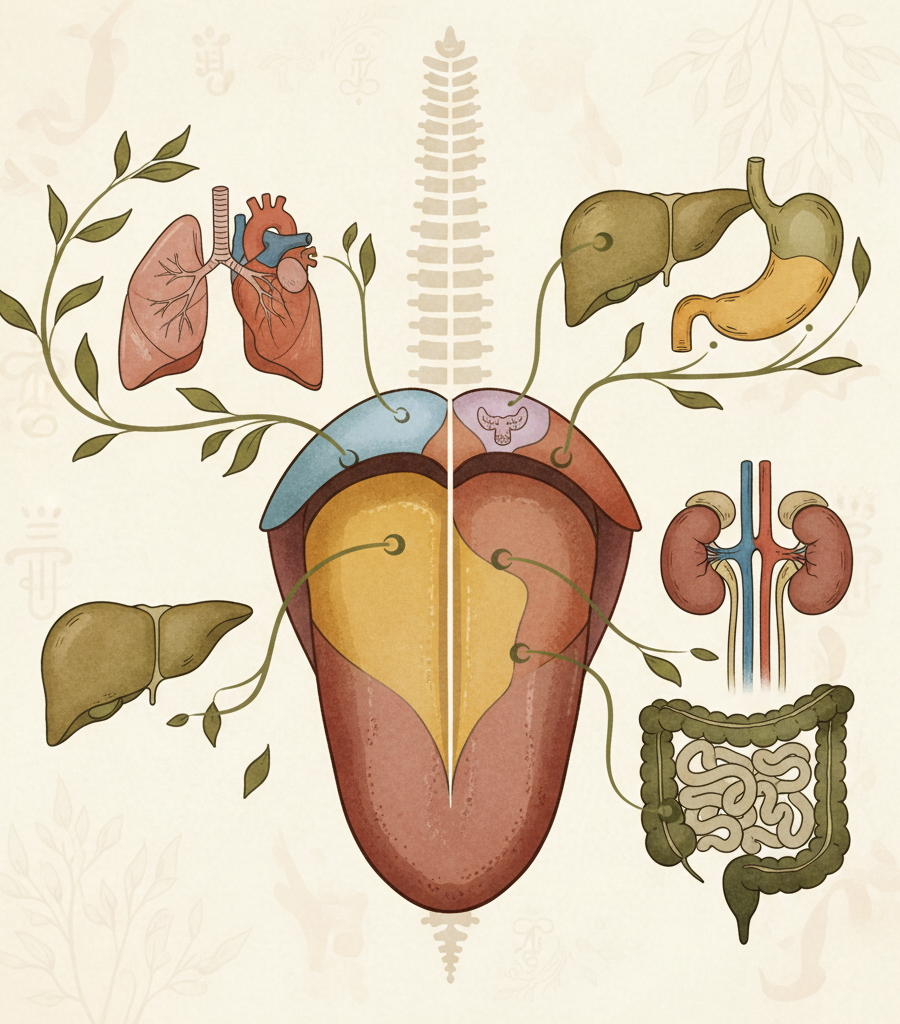
According to Ayurvedic principles, each zone of the tongue is directly connected to a specific organ system. Here is what that map looks like:
Front part: This part is connected to the lungs and heart.
Middle: The middle of the tongue tells us about the state of the liver, spleen, and stomach.
Back part (root): Deep in the root of the tongue lies information about the kidneys, small intestine, and large intestine.
Tip of the tongue: This is a small but important part that indicates the thyroid gland.
Central vertical line: This line, which runs down the middle, is connected to the spinal column.
What Do Deposits (Coating) on the Tongue Reveal?
The presence of any coating on the tongue is a clear indicator of toxin accumulation (Ama) in the system and is often a sign of poor digestion.
Deposits on the back part: These indicate the presence of toxins in the large intestine.
Deposits on the entire tongue: When the entire tongue is covered with a coating, it is a sign of systemic toxicity, meaning toxins have already spread into the bloodstream.
Ayurvedic Support: For detoxification and improving digestion, I believe options like Detox Tea, Triphala, or Digestion Support are excellent choices.
The Tongue According to Doshas: How to Recognize Your Constitution?
1. Vata Imbalance
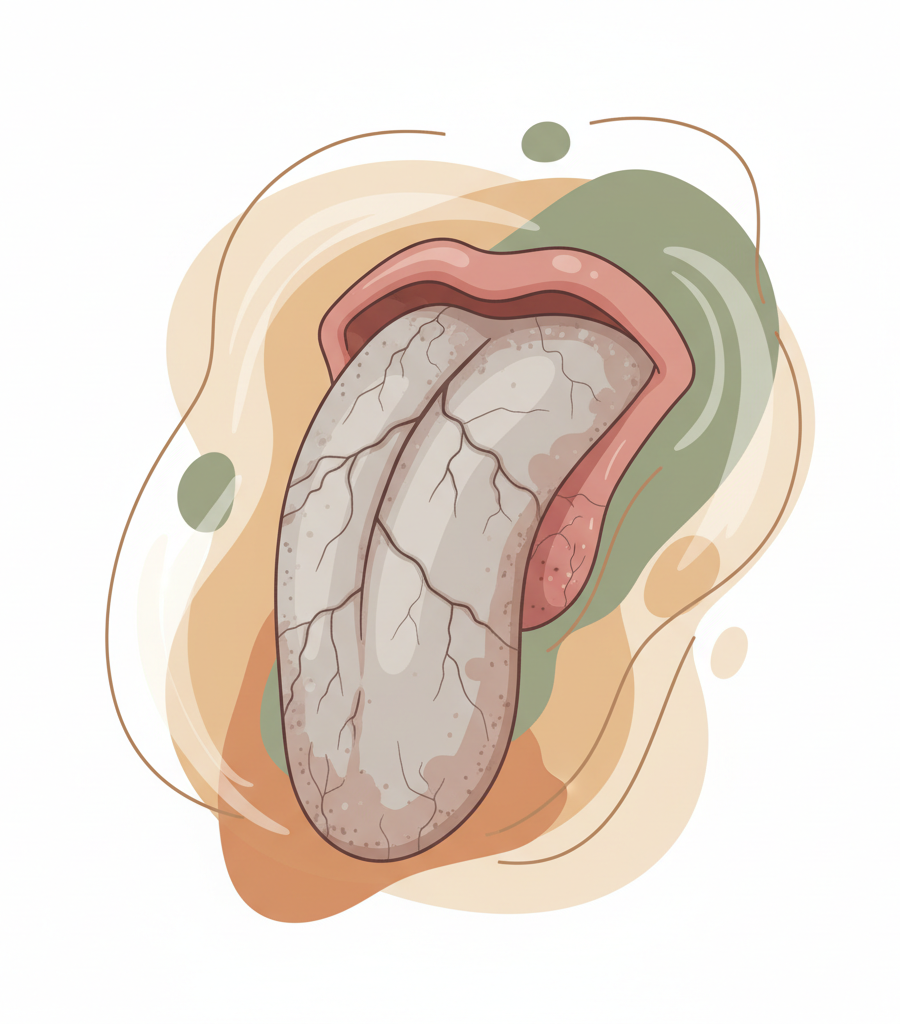
If you notice that the tongue is small, thin, pale, and dry, with many cracks, it is a sure sign of Vata dominance. The coating in this case is usually gray or brown.
Symptoms: Anxiety, insomnia, constipation, and gas often occur.
Recommended Product: To calm the nervous system, it is excellent to use Ashwagandha, while for bloating, Digestion Support is very effective.
2. Pitta Imbalance
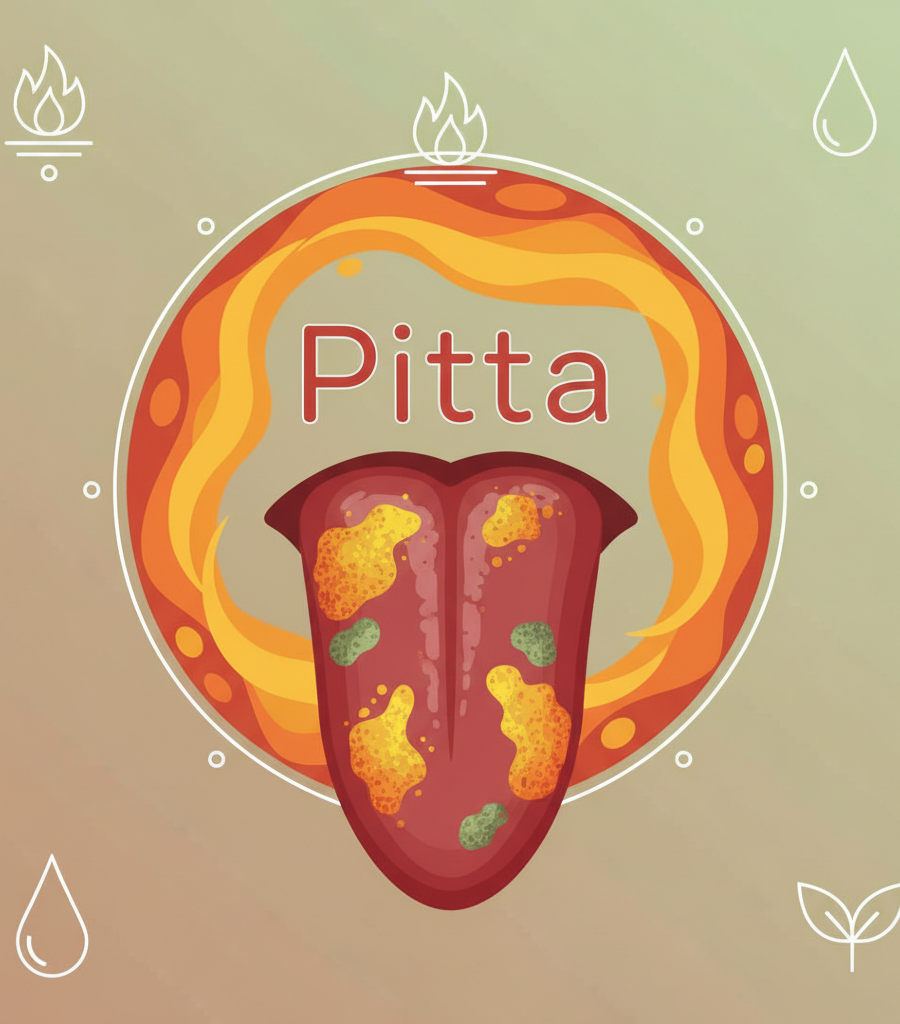
The tongue in the Pitta type is medium-sized, with a pointed tip and a distinct red color. The coating in this case is yellow, orange, or green.
Symptoms: Inflammation, heartburn, irritation, and skin problems are common issues.
Recommended Product: To cool the body, I recommend Pitta Shamak 2, and Curcumin is excellent for dealing with inflammation.
3. Kapha Imbalance

The Kapha tongue is large, heavy, and often looks swollen, with white, thick, and mucous deposits.
Symptoms: Lethargy, slow metabolism, fluid retention, and easy weight gain are often observed.
Recommended Product: Stholyantak Churna is excellent support for metabolism, and Guggul helps with detoxification.
Specific Signs on the Tongue and Their Meaning
Indentations along the edges (Teeth marks)
This is a classic sign of malabsorption – the body's inability to absorb nutrients. In my opinion, this can be caused by inflammation in the GI tract or even by parasites.
Support: Digestion Support can strengthen the digestive fire.
Vertical line down the middle
If you notice a line along the center, it usually indicates accumulated tension and stress in the spine. The upper part of the line is connected to the neck, and the lower part to the lumbar region.
Support: Stress Support can help in relieving nervous tension.
Pale tongue (Anemia)
Paleness is a sign of a reduced number of red blood cells. It can result from a deficiency of iron or B12, but also from parasitic infections. From experience, this sign should never be ignored.
Support: Consider Punarnava Mandur (natural iron support) and Amla Saar.

This sign indicates excessive heat in the blood, which can lead to ulcers, hyperacidity, and headaches.
Support: Neem is excellent for blood purification, while Arjuna can balance circulation.
Swollen tongue
A swollen tongue can indicate inflammation, an allergic reaction to food, or thyroid problems (hypothyroidism). It is always good to consult a specialist if this symptom is persistent.
Support: Kanchnaar Guggul is effective for the lymphatic system and the thyroid gland, and Punarnava helps against fluid retention.
Conclusion
Your tongue is, without a doubt, a free "health report" that you can read every day. By recognizing these signs and applying appropriate Ayurvedic herbs, I believe you can restore balance to your body in a completely natural way. Do not underestimate the power of this simple but deeply informative part of your body!
Literature Used and References
This text was prepared based on traditional Ayurvedic diagnostic principles and modern scientific research.
1. Internal list of Ayurvedic formulations
To support the conditions identified through the tongue, products from were used:
For digestive support and detoxification: Detox Tea, Triphala, and Digestion Support.
For balancing doshas: Pitta Balance and Ashwagandha.
For inflammation and blood cleansing: Curcumin and Neem.
For specific organ support: Punarnava, Punarnava Mandur, Kanchnaar Guggul, and Arjuna.
For metabolism and stress: Stholyantak Churna and Stress Support.
2. Traditional Ayurvedic sources
Ladha, V. (2002). Ayurveda: The Science of Self-Healing. A key source for mapping organs on the tongue.
Charaka Samhita. One of the fundamental texts of Ayurveda explaining the link between the tongue and toxins in the body (Ama).
3. Scientific research and online resources
Journal of Ayurveda and Integrative Medicine – A study on visual diagnostics and health assessment in Ayurveda.
NCBI - Tongue Diagnosis in Health Assessment – Research on how tongue changes are related to internal inflammatory processes.
ResearchGate - Ayurveda in the management of Hypothyroidism – A scientific paper on the effects of herbs like Kanchnaar Guggul.
Available in the US
Products in this area of wellness
Traditionally used in the areas this article covers. They are not treatments for any condition, and nothing here is a recommendation for you specifically.
Disclosure: some links below are affiliate links. If you buy through them, AyurvedaGrid may earn a commission at no extra cost to you, and those products are listed first. Which products are relevant at all comes from the topic of the article — nothing here is a recommendation for you specifically.
- Moringa Oil Capsules Super Food Extract(opens in a new tab)affiliateSri Sri Tattva USA· Capsule
General wellness; no single focus — daily superfood nourishment
- AyushMulti(opens in a new tab)Ayush Herbs
General wellness; no single focus — daily multivitamin
- Green Essentials Capsules(opens in a new tab)Planet Ayurveda· Capsule
General wellness; no single focus — daily antioxidant greens
These statements have not been evaluated by the Food and Drug Administration. These products are not intended to diagnose, treat, cure or prevent any disease. Speak to your own healthcare provider before starting a supplement, particularly if you are pregnant, nursing, or taking medication.
Continue reading
 Ayurvedic Basics & Doshas
What is Ayurveda: A Complete Guide for Beginners and Healthy Living
Discover the power of Ayurveda: A comprehensive guide to the 5,000-year-old "Science of Life." Learn how to identify your unique doshas (Vata, Pitta, and Kapha), how to kindle your digestive fire (Agni), and how to integrate ancient rituals and powerful herbs into a modern lifestyle for perfect balance and longevity.
 Ayurveda
Turmeric as a Remedy: Benefits, Uses, and Best Recipes
This blog post serves as a comprehensive guide to the power of the "golden spice" – turmeric. The text explains in detail the anti-inflammatory and antioxidant properties of curcumin, its application for chronic pain, digestive issues, and boosting immunity. In addition to scientific facts, the post offers practical recipes for "golden milk" and tea, as well as recommendations for high-quality supplements for maximum results.
 Ayurveda
Natural home remedies everyone should know: Your kitchen as a pharmacy
Discover 19 simple and powerful home remedies from your kitchen that help with coughing, digestive issues, headaches, and boosting immunity. Learn how the ancient Ayurvedic wisdom can help you improve your health in a natural way.
Your Ayurvedic overview
Curious about your own constitution?
Take the free guided assessment and receive your personal Ayurvedic overview — about ten minutes, private to your account.
Start Your Journey