
Vitamin C: A powerful ally for your health!

Vitamin C and its benefits are an important part of a guide to Ayurvedic nutrition, and experts often highlight Vitamin C as one of the safest and most effective nutrients. Although we cannot expect it to cure a cold, the benefits are numerous and include protection against immune deficiencies, cardiovascular diseases, prenatal health problems, eye conditions, and even the appearance of wrinkles. It is important to know that the tolerable upper intake level—the maximum daily dose without negative consequences—is 2000 mg for adults.
A relevant study published in "Seminars in Preventive and Alternative Medicine" reviewed the results of over 100 studies over a decade. The findings showed an ever-growing list of potential positive effects of Vitamin C.
Mark Moyad, PhD and MPH from the University of Michigan, who was one of the researchers on this study, rightly emphasizes: "Vitamin C has received a great deal of publicity, and for good reason. Higher blood levels of vitamin C may be the ideal nutrition marker for overall health. The more we study vitamin C, the better we understand how diverse it is in protecting our health—from cardiovascular disease, cancer, stroke, eye health, and strong immunity to contributing to a longer life."
Vitamin C deficiency most commonly occurs in malnourished adults. In extreme cases, it can lead to scurvy, a condition manifested by weakness, anemia, easy bruising, bleeding, and loose teeth.
I believe that food is the best way to get all the necessary nutrients. By consuming fruits, vegetables, and other natural products, in addition to Vitamin C, we intake many other vitamins, minerals, and fiber—a complete package for our body.
To meet the recommended daily intake of Vitamin C, one cup of orange juice or half a cup of red pepper is sufficient. However, if you want to reach a dose of 500 milligrams (mg), you can combine several of these foods and drinks, including:
Cantaloupe, 1 cup: 59 mg
Orange juice, 1 cup: 97 mg
Broccoli, cooked, 1 cup: 74 mg
Red cabbage, 1/2 cup: 40 mg
Green pepper, 1/2 cup: 60 mg
Red pepper, 1/2 cup: 95 mg
Kiwi, 1 medium: 70 mg
Tomato juice, 1 cup: 45 mg.
The Significant Role of Vitamin C in Our Body
Vitamin C, also known as ascorbic acid, is crucial for the proper growth, development, and repair of all body tissues. It participates in many vital functions, including collagen formation, iron absorption, proper functioning of the immune system, accelerated wound healing, and the maintenance of healthy cartilage, bones, and teeth.
As one of many antioxidants, Vitamin C has the power to protect us from damage caused by harmful molecules called free radicals, as well as from toxic chemicals and pollutants, such as cigarette smoke. If free radicals accumulate in the body, they can contribute to the development of serious health conditions like cancer, heart disease, and arthritis.
Since our body does not store Vitamin C, there is no need to worry about overdosing. However, it is important not to exceed the safe upper limit of 2,000 milligrams per day to avoid stomach upset and diarrhea. Therefore, to ensure continuous support from this vitamin, it is essential to regularly consume fruits and vegetables rich in it.
Vitamin C offers many health benefits, especially in these areas:
Stress. It has been noted that Vitamin C deficiency is associated with many stress-related diseases. This vitamin is the first nutrient to be rapidly depleted in alcoholics, smokers, and overweight individuals. This is no coincidence, as Vitamin C is sensitive to stress and its reserves are quickly consumed in such situations.
Colds. When it comes to the common cold, Vitamin C, unfortunately, is not a magic cure. But there are studies suggesting it may help prevent more serious complications. There is good evidence that taking Vitamin C during a cold or flu can significantly reduce the risk of developing further complications, such as pneumonia and lung infections.
Stroke. Although research is sometimes contradictory, a study published in the "American Journal of Clinical Nutrition" showed that those with the highest concentrations of Vitamin C in their blood had a 42% lower risk of stroke compared to those with the lowest concentrations. The reasons for this are not yet fully understood. However, what is clear is that people who regularly consume plenty of fruits and vegetables have higher levels of Vitamin C in their blood.
Skin Aging. Vitamin C affects cells both from the inside and outside, and its antioxidant properties can be extremely beneficial in the fight against aging. A study published in the "American Journal of Clinical Nutrition" examined the links between nutrient intake and skin aging in 4,025 women aged 40 to 74. The results showed that higher Vitamin C intake was associated with a lower likelihood of wrinkles, dry skin, and a generally better appearance of aging skin. Additionally, some studies have proven that topical Vitamin C treatments also reduce wrinkles.
Other studies indicate that Vitamin C may also play a role in:
Improving macular degeneration.
Reducing inflammation.
Reducing the risk of cancer and cardiovascular diseases.
The foods richest in Vitamin C, which we can easily include in our diet, are citrus fruits, green peppers, strawberries, tomatoes, broccoli, white potatoes, and sweet potatoes. We should not forget cantaloupe, papaya, mango, watermelon, Brussels sprouts, cauliflower, cabbage, red peppers, raspberries, blueberries, and pineapple—all of which are excellent sources.
Here are eight simple ways to include more fruits and vegetables in your daily diet:
Add grated fruits and vegetables to recipes for muffins, meat, and soups—it's a great way to increase nutritional intake without changing much.
Always keep fruits and vegetables on hand for a quick and healthy snack.
Frozen fruit pieces are a wonderful summer delicacy, especially on hot days.
Include lettuce, tomatoes, and broccoli in all your sandwiches—they add freshness and nutrients.
Enjoy raw vegetables with low-fat hummus—a tasty and healthy combination.
Add fresh or frozen berries to muffins, pancakes, cereals, and salads for extra flavor and vitamins.
Toss a handful of dried fruit into your cereal porridge for an easy and quick snack.
Enjoy a glass of vegetable juice as a low-calorie afternoon snack—refreshing and nutritious.
recommends Amalaki Rasayan and Amla Saar, which are considered some of the richest sources of natural Vitamin C in the world.
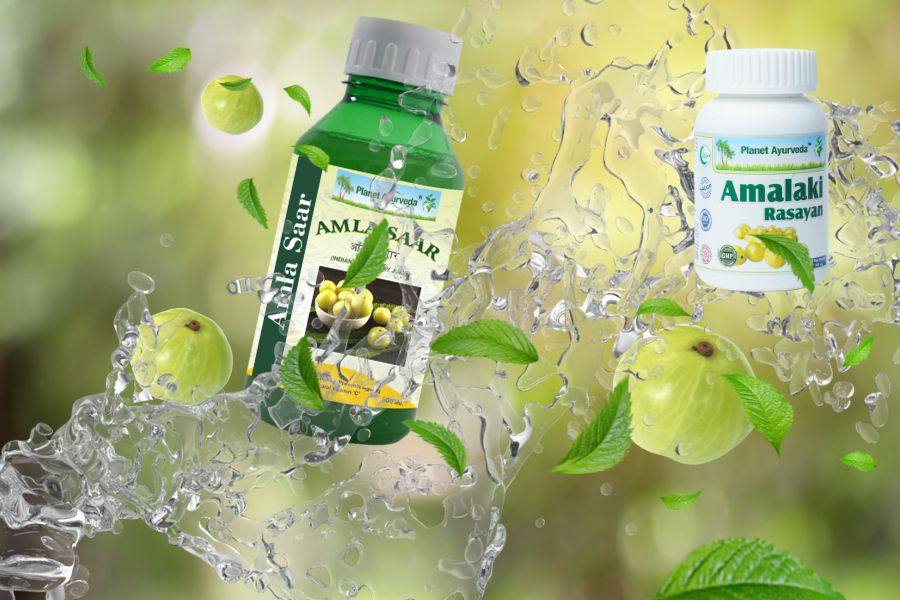
Both Amla Saar and Amalaki Rasayan are based on Amla (Emblica officinalis), one of the most famous Ayurvedic fruits, which is a natural source of Vitamin C. In Ayurveda, Amla is highly valued because it supports the body's defenses and tissue renewal without causing "heaviness" in digestion.
Amla Saar is an ideal choice when looking for pure, concentrated support, especially in seasons when the body is exposed to particular stress. Amalaki Rasayan goes a step further, offering a classic Rasayana approach for long-term vitality, antioxidant protection, and support for skin and collagen production.
Key benefits you can expect:
Support for the immune system, especially during periods of colds and fatigue.
Antioxidant protection against oxidative stress, helping to fight free radicals.
Support for healthy skin, collagen production, and faster healing.
Improvement of energy and recovery during physical and mental exertion.
Gentle support for digestion, especially when feeling "heaviness" after meals.
References
National Institutes of Health, Office of Dietary Supplements. Vitamin C Fact Sheet for Health Professionals. Accessed 22.12.2025. Office of Dietary Supplements
National Institutes of Health, Office of Dietary Supplements. Vitamin C Fact Sheet for Consumers. Accessed 22.12.2025. Office of Dietary Supplements
Institute of Medicine. Dietary Reference Intakes for Vitamin C, Vitamin E, Selenium, and Carotenoids. National Academies Press, 2000. Accessed 22.12.2025. NCBI+1
MedlinePlus (U.S. National Library of Medicine). Vitamin C. Accessed 22.12.2025. MedlinePlus
Mayo Clinic. Too much vitamin C: Is it harmful? Accessed 22.12.2025. Mayo Clinic+1
USDA FoodData Central. Nutritional database for Vitamin C by food item. Accessed 22.12.2025. FoodData Central+1
Hemilä H, Chalker E. Vitamin C for preventing and treating the common cold. Cochrane Database of Systematic Reviews, 2013 (CD000980). Cochrane+1
Hemilä H, Louhiala P. Vitamin C for preventing and treating pneumonia. Cochrane Database of Systematic Reviews, 2013 (CD005532). Cochrane+1
Myint PK, Luben RN, Welch AA, et al. Plasma vitamin C concentrations predict risk of incident stroke and coronary heart disease. American Journal of Clinical Nutrition, 2008. PubMed
Cosgrove MC, Franco OH, Granger SP, et al. Dietary nutrient intakes and skin-aging appearance among middle-aged American women. American Journal of Clinical Nutrition, 2007. PubMed+1
Chen GC, Lu DB, Pang Z, Liu QF. Vitamin C intake, circulating vitamin C and risk of stroke. Meta-analysis. 2013. PMC
Prananda AT, et al. Phyllanthus emblica: a comprehensive review of its pharmacological properties and health benefits. 2023. PMC+1
Gul M, Liu ZW, et al. Functional and nutraceutical significance of Amla (Phyllanthus emblica). 2022. PMC
Scartezzini P, Antognoni F. Vitamin C content and antioxidant activity of the fruit and of the Ayurvedic preparation of Emblica officinalis. 2005. Europe PMC
Sharma R, Martins N, Kuca K, Chaudhary A, Kabra A, Rao MM, et al. Chyawanprash: A Traditional Indian Bioactive Health Supplement. 2019
Available in the US
Products in this area of wellness
Traditionally used in the areas this article covers. They are not treatments for any condition, and nothing here is a recommendation for you specifically.
Disclosure: some links below are affiliate links. If you buy through them, AyurvedaGrid may earn a commission at no extra cost to you, and those products are listed first. Which products are relevant at all comes from the topic of the article — nothing here is a recommendation for you specifically.
- Golden Monkey Ghee (Clarified Butter)(opens in a new tab)affiliateSri Sri Tattva USA· Ghee
Food and drink for everyday nourishment — everyday cooking fat
- Ojasvita Herbal Health Drink - Chocolate(opens in a new tab)affiliateSri Sri Tattva USA· Drink Mix
Food and drink for everyday nourishment — daily nourishing drink
- Ojasvita Herbal Health Drink - Golden Spiced Latte(opens in a new tab)affiliateSri Sri Tattva USA· Drink Mix
Food and drink for everyday nourishment — warming spiced drink
These statements have not been evaluated by the Food and Drug Administration. These products are not intended to diagnose, treat, cure or prevent any disease. Speak to your own healthcare provider before starting a supplement, particularly if you are pregnant, nursing, or taking medication.
Continue reading
 Ayurvedic Basics & Doshas
What is Ayurveda: A Complete Guide for Beginners and Healthy Living
Discover the power of Ayurveda: A comprehensive guide to the 5,000-year-old "Science of Life." Learn how to identify your unique doshas (Vata, Pitta, and Kapha), how to kindle your digestive fire (Agni), and how to integrate ancient rituals and powerful herbs into a modern lifestyle for perfect balance and longevity.
 Ayurveda
Turmeric as a Remedy: Benefits, Uses, and Best Recipes
This blog post serves as a comprehensive guide to the power of the "golden spice" – turmeric. The text explains in detail the anti-inflammatory and antioxidant properties of curcumin, its application for chronic pain, digestive issues, and boosting immunity. In addition to scientific facts, the post offers practical recipes for "golden milk" and tea, as well as recommendations for high-quality supplements for maximum results.
 Ayurveda
Natural home remedies everyone should know: Your kitchen as a pharmacy
Discover 19 simple and powerful home remedies from your kitchen that help with coughing, digestive issues, headaches, and boosting immunity. Learn how the ancient Ayurvedic wisdom can help you improve your health in a natural way.
Your Ayurvedic overview
Curious about your own constitution?
Take the free guided assessment and receive your personal Ayurvedic overview — about ten minutes, private to your account.
Start Your Journey