
Types of Allergies: Recognizing Symptoms and Natural Treatment

Allergies are truly one of the most common health problems today. Imagine, your immune system, instead of defending you from real threats, begins to overreact and respond violently to completely harmless substances. And while for most people pollen or ordinary house dust are completely insignificant, in allergic individuals they can cause a whole range of unpleasant symptoms that seriously impair the quality of life.
What will you learn from this guide?
Diversity: There are many different types of allergies – from respiratory and skin allergies to food allergies. Each has its own specific triggers, and it is important to know them.
Recognition: Early recognition of symptoms is key, as it allows us to react in time and treat ourselves properly.
Holistic Approach: From my experience, the combination of conventional medicine with the wisdom of Ayurveda gives the best and most sustainable results in the long run.
Prevention: The best strategy is, of course, avoiding allergens – that is the first and most important line of defense.
1. What are allergies and why do they happen?
We can freely say that an allergy is a type of defense mechanism that has "gone wrong." When our body comes into contact with an allergen – whether it is pollen, mites, or certain food – the immune system completely misidentifies it as a dangerous enemy that must be destroyed.
To defend itself, the body begins to violently produce antibodies (immunoglobulin E, or IgE), which then trigger the release of a very important chemical mediator – histamine. And it is histamine that is the main culprit for all those inflammatory processes we experience: swelling, annoying itching, persistent sneezing, and watery eyes.
2. Allergic Rhinitis (Hay Fever)
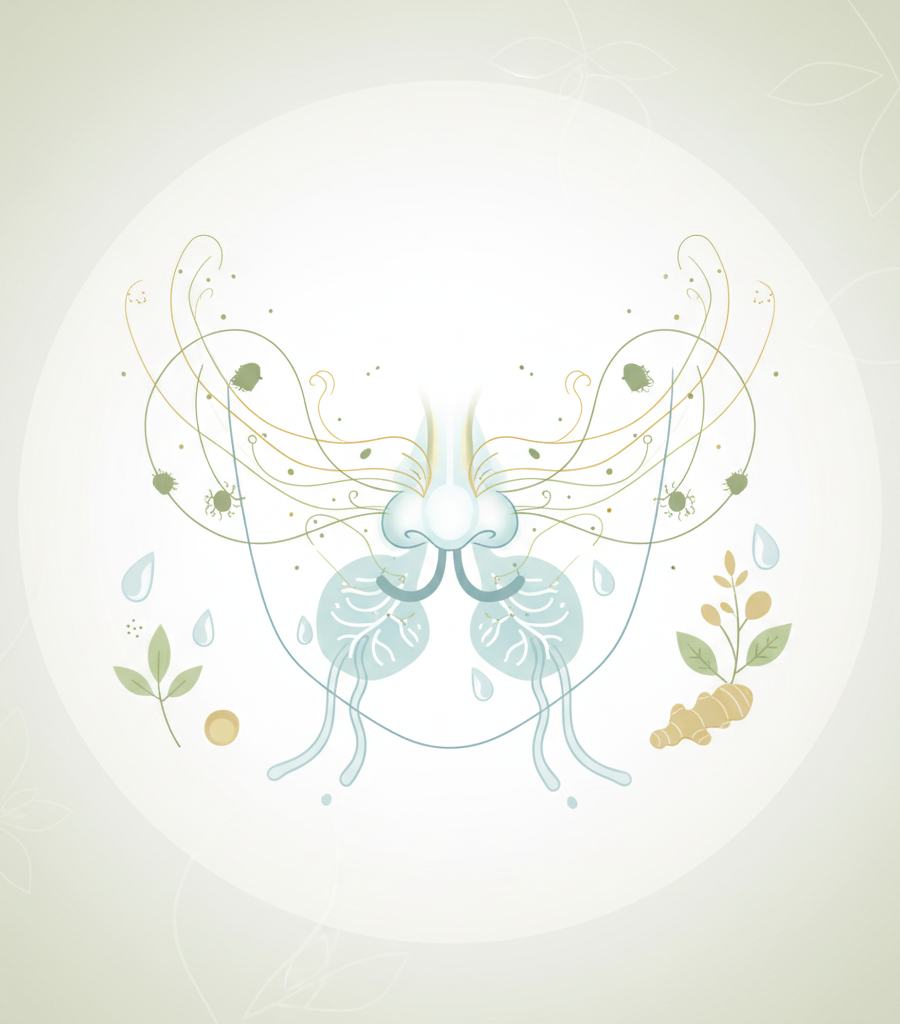
Allergic rhinitis, better known as hay fever, is by far the most widespread form of respiratory allergy. It can be seasonal, when caused by plant pollen at a certain time of year, or year-round, if you struggle with allergies to house dust or pets throughout the entire year.
Symptoms you must not ignore:
Serial sneezing, especially in the morning. You know, when you sneeze five or six times in a row.
Constant watery nasal discharge or, alternatively, a chronically stuffy nose.
Itching of the palate and throat, which can be truly irritating.
What some call "allergic shiners" – dark circles under the eyes resulting from nasal congestion.
Ayurvedic Solution:
According to the philosophy of Ayurveda, this condition is often seen as an imbalance of the Kapha dosha. To solve this problem, you can try several things:
Use a Neti Pot: This is a small vessel used to clean the nasal passages with salt water, helping to physically remove allergens.
Herbal Trio-Treatment: The combination of Tulsi (Holy Basil), Curcumin (Turmeric), and the specialized product Aller-G Care can help soothe the mucous membrane. Interestingly, these herbs do not cause drowsiness, as standard antihistamines often do.
3. Food Allergies: When Food Becomes the Enemy

It is important to make a distinction: a food allergy is very different from food intolerance. While intolerance is purely a digestive problem, an allergy involves an immune response that, unfortunately, can be life-threatening.
The Most Common "Culprits" (Top 8 Allergens):
Nuts (this includes peanuts, walnuts, etc.).
Gluten (mostly from wheat and barley).
Lactose and Casein (found in dairy products).
Seafood.
Eggs and Soy.
How to recognize the symptoms?
Swelling of the tongue or lips, appearing immediately after eating.
Abdominal cramps and diarrhea.
Skin rash, known as urticaria (hives).
Attention: If you experience difficulty swallowing or breathing, do not wait – seek emergency medical help immediately, as it may be anaphylactic shock.
4. Skin Allergies: Eczema and Dermatitis
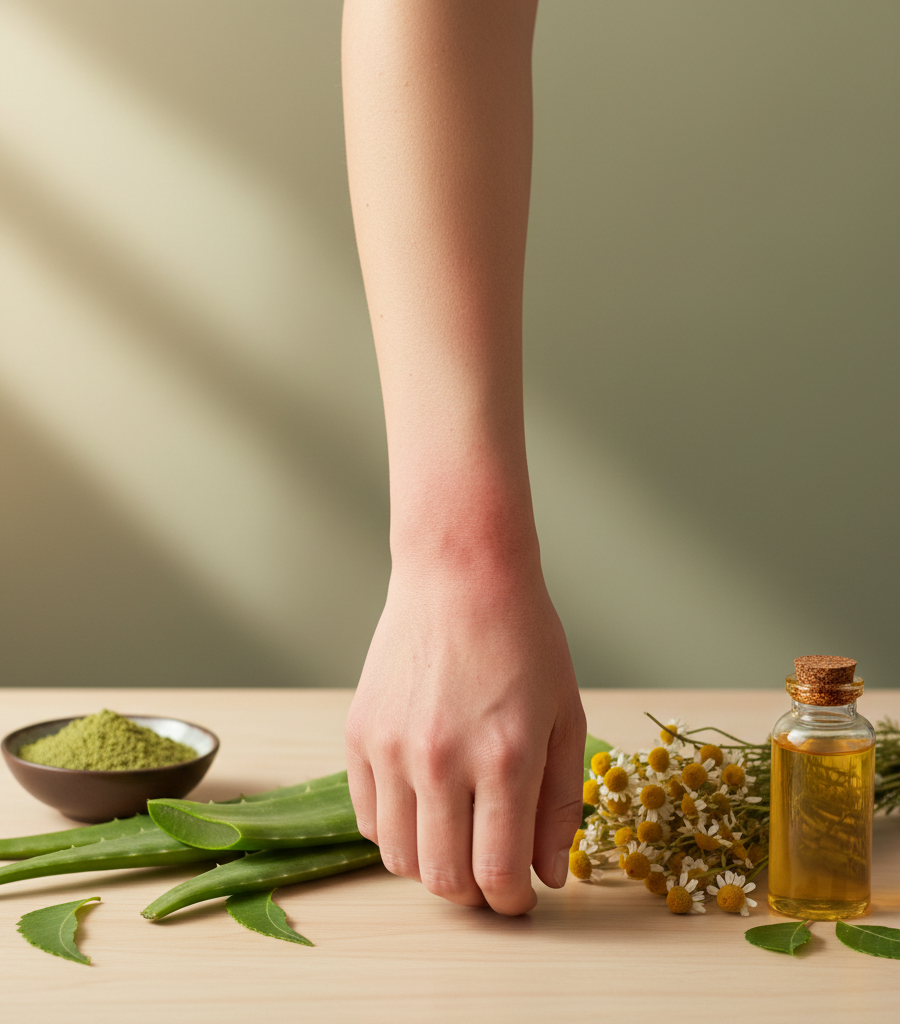
Our skin is the largest organ and, logically, is often the first to react to external irritants. Skin allergies can occur as a result of direct contact with an allergen (for example, jewelry or cosmetics) or as a systemic reaction to food or medication.
Types of skin reactions:
Contact Dermatitis: Appears as redness exactly where the skin came into contact with a metal (such as nickel) or a chemical.
Urticaria (Hives): These are raised, red patches on the skin that itch intensely.
Atopic Dermatitis (Eczema): A chronic condition of dry and cracked skin, often appearing in children.
Skin Care Advice:
Avoid aggressive soaps containing sulfates. Instead, use pure coconut oil or preparations with Curcumin, which helps reduce inflammation internally (especially if it involves a Pitta dosha imbalance).
5. Seasonal Allergies and Their Calendar
Many people suffer from allergies only during certain parts of the year. If you know which is "your" season, it will be much easier to prepare and minimize problems:
Spring: This is the time for tree pollen. Birches, for example, are among the strongest allergens.
Summer: During the summer period, grass pollen causes problems.
Autumn: Autumn is reserved for ragweed, which causes a truly severe form of seasonal allergy.
Tip: If you plan to spend time outdoors, be sure to check the "pollen forecast." Also, try to avoid going out between 05:00 and 10:00 in the morning, when the concentration of pollen in the air is highest.
6. Natural Treatment and Prevention
Instead of just masking the symptoms, a holistic approach focuses on strengthening the entire immune system. Here are some practical tips:
Practical tips for the home:
HEPA Filters: Invest in vacuum cleaners and air purifiers with HEPA filters. They are excellent for trapping microscopic allergens.
Pet Hygiene: Regularly bathe dogs and cats to reduce dander, which spreads in the air and is a strong allergen.
Washing Temperature: Wash bedding at a minimum of 60°C. This is a proven way to destroy dust mites.
Why are Ayurvedic herbs effective?
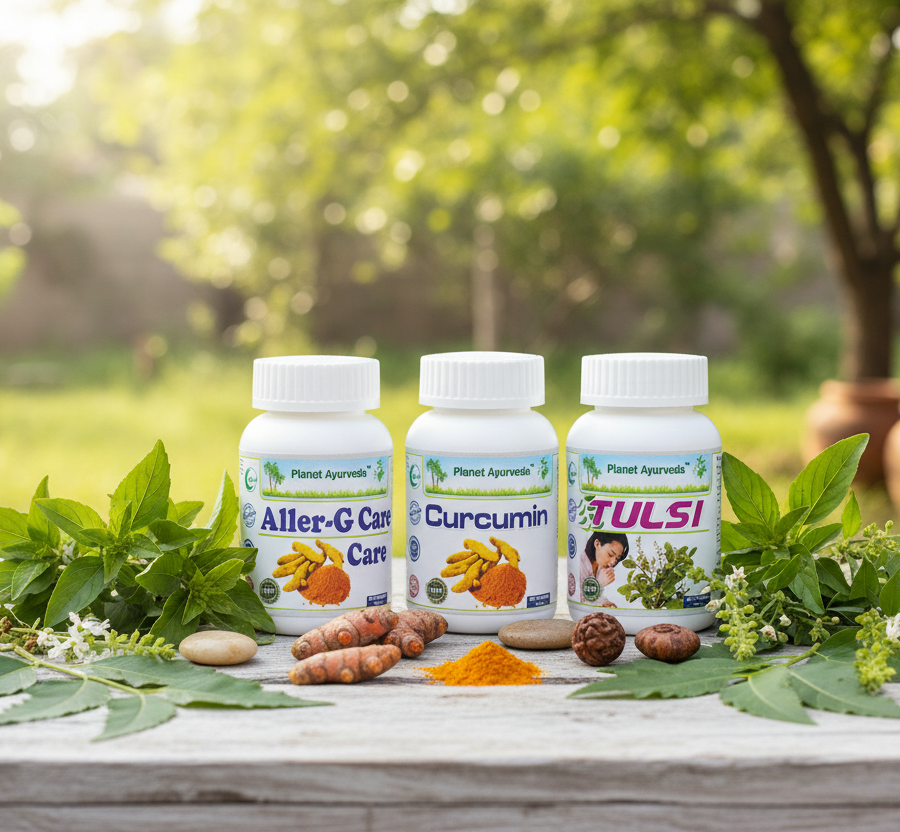
Tulsi (Holy Basil): Acts as a natural antihistamine, helping to calm the body's reaction.
Curcumin: The active ingredient in turmeric, it blocks the inflammatory protein NF-kB, which is key to allergic reactions.
Aller G Care: This product helps in cleansing the blood of toxins (Ama), which can worsen allergic reactions.
Click here to view the full range of natural anti-allergy supplements.
Frequently Asked Questions (FAQ)
1. Are allergies hereditary? Yes, there is definitely a genetic predisposition. If both parents have allergies, the chances of the child developing them are over 70%.
2. What is the difference between a cold and allergic rhinitis? A cold usually passes in 7-10 days and may be accompanied by a fever. An allergy, on the other hand, lasts as long as you are exposed to the allergen and is always accompanied by characteristic itching.
3. Can an allergy disappear on its own? In children, some allergies (such as those to milk or eggs) can sometimes disappear with age. However, respiratory allergies in adults usually require long-term management and care.
Conclusion
Recognizing the types of allergies is the first and most important step toward a symptom-free life. Whether you are struggling with seasonal hay fever or a reaction to food, it is crucial to act in time. Combine advice for a clean environment with the power of nature to allow your body to breathe freely and live a higher quality of life.
References and Scientific Sources
In preparing this text, renowned medical institutions and scientific studies were consulted to confirm the symptoms, causes, and effectiveness of natural allergy treatments:
World Allergy Organization (WAO) – The global authority on allergology and immunology. Their resources provide an overview of the prevalence of respiratory allergies.
Mayo Clinic – One of the world's leading medical centers with detailed information on diagnosing food and skin allergies.
National Center for Biotechnology Information (NCBI) – Scientific study on the therapeutic effect of curcumin in allergic rhinitis.
Journal of Ayurveda and Integrative Medicine – Study on the role of the Tulsi plant (Holy Basil) in strengthening the immune system and dealing with allergies.
American Academy of Allergy, Asthma & Immunology (AAAAI) – Source for understanding the difference between seasonal and year-round allergies.
® Research – Clinical insights into herbal formulations like Aller-G Care in managing the histamine response.
Available in the US
Products in this area of wellness
Traditionally used in the areas this article covers. They are not treatments for any condition, and nothing here is a recommendation for you specifically.
Disclosure: some links below are affiliate links. If you buy through them, AyurvedaGrid may earn a commission at no extra cost to you, and those products are listed first. Which products are relevant at all comes from the topic of the article — nothing here is a recommendation for you specifically.
- Kabasura Kudineer - Immunity & Respiratory(opens in a new tab)affiliateSri Sri Tattva USA· Tablet
Supports respiratory and throat comfort — chest and throat comfort in season change
- Tulsi Drops - Respiratory Support*(opens in a new tab)affiliateSri Sri Tattva USA· Drops
Supports respiratory and throat comfort — throat and chest comfort
- Kalmegh (Andrographis)- Respiratory & Liver(opens in a new tab)affiliateSri Sri Tattva USA· Tablet
Supports respiratory and throat comfort — bitter herb for clear breathing
These statements have not been evaluated by the Food and Drug Administration. These products are not intended to diagnose, treat, cure or prevent any disease. Speak to your own healthcare provider before starting a supplement, particularly if you are pregnant, nursing, or taking medication.
Continue reading
 Ayurvedic Basics & Doshas
What is Ayurveda: A Complete Guide for Beginners and Healthy Living
Discover the power of Ayurveda: A comprehensive guide to the 5,000-year-old "Science of Life." Learn how to identify your unique doshas (Vata, Pitta, and Kapha), how to kindle your digestive fire (Agni), and how to integrate ancient rituals and powerful herbs into a modern lifestyle for perfect balance and longevity.
 Ayurveda
Turmeric as a Remedy: Benefits, Uses, and Best Recipes
This blog post serves as a comprehensive guide to the power of the "golden spice" – turmeric. The text explains in detail the anti-inflammatory and antioxidant properties of curcumin, its application for chronic pain, digestive issues, and boosting immunity. In addition to scientific facts, the post offers practical recipes for "golden milk" and tea, as well as recommendations for high-quality supplements for maximum results.
 Ayurveda
Natural home remedies everyone should know: Your kitchen as a pharmacy
Discover 19 simple and powerful home remedies from your kitchen that help with coughing, digestive issues, headaches, and boosting immunity. Learn how the ancient Ayurvedic wisdom can help you improve your health in a natural way.
Your Ayurvedic overview
Curious about your own constitution?
Take the free guided assessment and receive your personal Ayurvedic overview — about ten minutes, private to your account.
Start Your Journey