
Sperm count: 7 tips for increasing it naturally

Is a reduced sperm count or lower quality making it difficult for you to expand your family? This can be a quite stressful situation, even if pregnancy is not in your immediate plans. But there is good news: daily habits play a key role! Often, with just a few thoughtful changes, a significant improvement in sperm count, motility, and overall sperm quality can be observed.
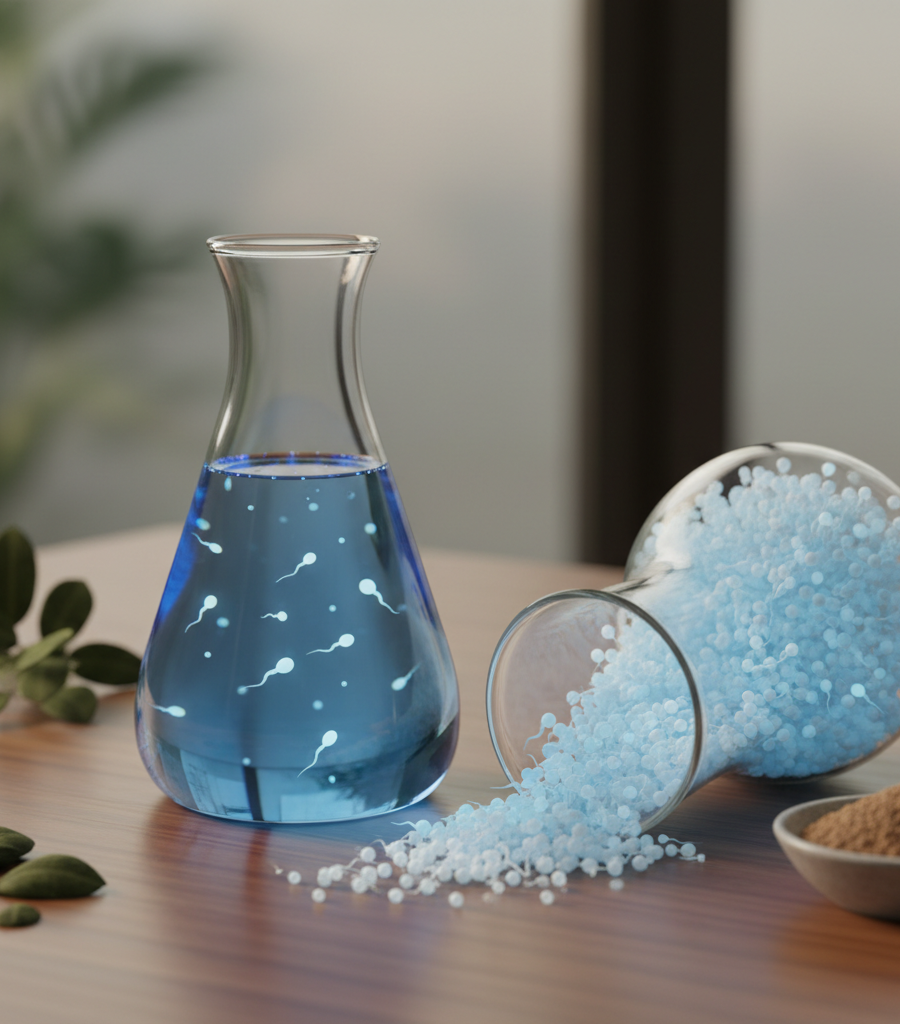
What does "low sperm count" actually mean and why is it important?
It is important to understand that low sperm count is just one aspect of the broader picture of fertility. In addition to the count, the following are of exceptional importance:
sperm concentration
their motility (whether they move fast enough and in the right direction)
morphology (their shape and structure)
as well as ejaculate volume.
Therefore, instead of focusing on just one number, aim to improve the overall quality of the sperm.
How quickly can changes be expected?
The production and maturation of sperm is a process that takes approximately 2 to 3 months. This means you cannot expect results overnight. It is best to be consistent with new habits for at least 8 to 12 weeks before doing a re-check. Patience is key!
Tip 1: Start with the facts – get a spermogram
Before investing time and money in various supplements or methods, first make it a priority to get a clear picture of the current situation. Start with an analysis:
Get a spermogram (semen analysis).
Visit a urologist for an examination.
If the doctor recommends it, do basic blood tests as well.
Practical: Write down all the results and track your progress every 3 months. This way, you will have a clear insight into what is actually helping you and what is not.
Tip 2: Eat for spermatogenesis, not just to feel full
Sperm quality is directly related to the intake of antioxidants, healthy fats, and essential micronutrients. Diet plays a huge role!

Dietary Focus:
Proteins: Include eggs, fish, turkey, and legumes.
Healthy Fats: Use olive oil, avocado, and nuts.
Zinc and Selenium: Don't forget pumpkin seeds, walnuts, eggs, and fish.
Folates: Consume spinach, broccoli, and green salads.
Vitamin C and E: For these, turn to bell peppers, kiwi, almonds, and sunflower seeds.
Omega-3 Fatty Acids: Sardines, salmon, flaxseed, and chia are excellent sources.
What you should limit in your diet:
Fried food
Industrial trans fats
Too much sugar
Carbonated drinks
Tip 3: Get rid of excess weight and move smartly
Obesity is often linked to poor sperm parameters and hormonal imbalance. Therefore, physical activity is necessary, but smartly dosed.

What to do:
Walk for 30 to 45 minutes daily.
Do strength training 2 to 3 times a week.
Include moderate cardio, but without overdoing it.
Important: Extreme workouts, excessive exhaustion, and overheating the body are not a good plan for improving fertility. The goal is stability and balance.
Tip 4: Reduce stress and improve sleep
Stress and poor-quality sleep directly affect hormonal balance and oxidative stress, which in turn reflects on reproductive function. This is just as important as diet!
14-day routine – how to start:
Try to sleep 7 to 8 hours every night, and at approximately the same time.
Avoid screens for at least 30 minutes before bed.
Start the day with a morning walk in daylight.
Use yoga and breathing techniques:
Practice light yoga for 15 to 20 minutes.
Try 5 minutes of Nadi Shodhana (alternate nostril breathing).
Practice 3 minutes of Bhramari (bee breathing).
Tip 5: Protect the testicles from heat and pressure
Sperm requires a lower temperature than body temperature for optimal maturation. Heat and pressure are enemies of its quality.
What you can change today:
Avoid long, hot baths and saunas.
Do not keep your laptop on your lap.
If your job is sedentary, take short breaks every 45 to 60 minutes.
Wear looser underwear if you feel that tight ones are overheating you.

About the laptop and phone:
Always keep the laptop on a table. Do not carry your phone constantly in your front pocket, especially when it is warm.
Tip 6: Give up habits that reduce sperm quality
This, in my opinion, is the part that brings the biggest "payoff" in terms of improvement.
Smoking: Smoking is unequivocally linked to worse sperm count, motility, and morphology. If you are looking for one change with the greatest effect, start right here.
Alcohol: Frequent and heavy alcohol consumption seriously disrupts hormonal balance and sperm quality. Stick to moderation – that is the key.
Other risks: Watch out for anabolic steroids, recreational drugs, and insufficient hydration. All of these can have a negative impact.
Tip 7: Consider herbal support with a focus on quality
Herbs should be seen as a supplement to a healthy routine, not as a replacement for sleep, good nutrition, and other healthy habits. When choosing, always pick standardized extracts and follow the instructions.

Maca Root
Traditionally used to improve libido and vitality. Some research shows improvement in certain sperm parameters in some men, especially motility and volume.
Ashwagandha (Withania somnifera)
In Ayurvedic medicine, ashwagandha is considered a rasayana herb, meaning it rejuvenates. Clinical trials in some men show improvement in concentration, motility, and morphology, especially when stress and fatigue are present.
White Asparagus Root, Shatavari (Asparagus racemosus)
Traditionally used for reproductive support and vitality. Evidence for its effectiveness is more limited, but it is often included in formulas intended for reproductive health.
Tribulus terrestris, Gokshura
This herb is known for its benefits for libido and the urinary tract. While evidence for directly increasing sperm count is mixed, better sexual function and increased subjective energy have been noted in some people.
How to choose a quality herbal product?
Look for a standardized extract.
Check for a clear declaration of ingredients and concentration.
Look for products that are tested for quality.
For best results, use it continuously for at least 3 months.
Short routine for a start, without complications
Week 1:
Try to go to bed and wake up at the same time.
Walk for 30 minutes a day.
Stop keeping the laptop on your lap.
Week 2 to 4:
Improve your diet by including seeds, fish, and green leafy vegetables.
Practice yoga and breathing for 10 minutes a day.
Reduce alcohol intake to a minimum.
Week 5 to 12:
Add herbal support of your choice.
Include strength training 2 times a week.
Carefully monitor your progress and any changes in symptoms.
Frequently Asked Questions
Do hot baths have an effect?
Absolutely. Long exposure to heat is definitely not a friend to the process of spermatogenesis.
How long does it take to see results?
It usually takes 2 to 3 months, as that is the length of the sperm production cycle.
Should I visit a doctor?
If you are planning a pregnancy and already have unsuccessful attempts, I highly recommend getting a spermogram and consulting a urologist. This will give you a clear direction and save you precious time.
Conclusion:
Add herbal support as a booster to your efforts, but the real victory comes from the routine. Start with the basics such as sleep, avoiding excessive heat, and quitting smoking. Then, work on improving your diet and managing stress. Small, consistent steps lead to big results.
References:
Durairajanayagam D. Causes, effects and molecular mechanisms of testicular heat stress. Reproductive BioMedicine Online. 2015. RBMO Journal
Griswold MD. Spermatogenesis: The Commitment to Meiosis. Physiological Reviews. 2016 (PMC). ScienceDirect
Jorban A, et al. Effect of Temperature on the Development of Stages of Spermatogenesis. 2024 (PMC). PMC
Shefi S, Tarapore PE, Walsh TJ, Croughan M, Turek PJ. Wet heat exposure: a potentially reversible cause of low semen quality in infertile men. International Brazilian Journal of Urology. 2007. PubMed+1
Garolla A, et al. Seminal and molecular evidence that sauna exposure affects human spermatogenesis. Human Reproduction. 2013. PubMed
Saikhun J, et al. Effects of sauna on sperm movement characteristics. Andrologia. 1998. Wiley Online Library
Sheynkin Y, et al. Increase in scrotal temperature in laptop computer users. Human Reproduction. 2005. OUP Academic+1
Sheynkin Y, et al. Protection from scrotal hyperthermia in laptop computer users. Fertility and Sterility. 2011. ScienceDirect
Garolla A, et al. Twenty-four-hour monitoring of scrotal temperature in obese men. Human Reproduction. 2015. OUP Academic
Wang SY, et al. Does obesity based on body mass index affect semen quality? A meta-analysis and systematic review. Andrologia. 2021. PubMed
Peel A, et al. The effect of obesity interventions on male fertility. Human Reproduction Update. 2025. OUP Academic
Sharma R, et al. Cigarette Smoking and Semen Quality: A systematic review and meta-analysis. European Urology Focus. 2016. PubMed
Osadchuk L, et al. Effects of cigarette smoking on semen quality and reproductive parameters (population study). 2023. PubMed
Ricci E, et al. Semen quality and alcohol intake: a systematic review and meta-analysis. Reproductive BioMedicine Online. 2017. PubMed
Nguyen-Thanh T, et al. Association between alcohol intake and male reproductive health: systematic review and meta-analysis. 2023 (PMC). PMC
Smits RM, et al. Antioxidants for male subfertility. Cochrane Database of Systematic Reviews. 2019. Cochrane Library
Cochrane. Antioxidants for male subfertility (evidence summary). 2022. Cochrane
de Ligny WR, et al. Antioxidant treatment and outcomes in men seeking fertility care (randomized trial). JAMA Network Open. 2025. JAMA Network
Ambiye VR, et al. Clinical evaluation of the spermatogenic activity of Ashwagandha (Withania somnifera) root extract in oligospermic males. 2013 (PMC). PMC
Withania somnifera and male reproductive system: systematic review. 2018. Wiley Online Library
Lee HW, et al. Maca (Lepidium meyenii) on semen quality parameters: systematic review and meta-analysis. 2022 (PubMed). PubMed
Frontiers in Pharmacology. Maca (Lepidium meyenii) on semen quality parameters (systematic review). 2022. Frontiers
Lee MS, et al. The use of maca (Lepidium meyenii) to improve semen quality: review of clinical trials. Maturitas. 2016. ScienceDirect+1
Meta-analysis on Tribulus terrestris and sperm parameters. 2023. Wiley Online Library
Sanagoo S, et al. Effect of Tribulus terrestris on sperm parameters in men: systematic review. 2019. ScienceDirect
Oyovwi MO, et al. Shatavari (Asparagus racemosus): review, including fertility-related evidence and limits of clinical data. 2025 (PubMed). PubMed
Available in the US
Products in this area of wellness
Traditionally used in the areas this article covers. They are not treatments for any condition, and nothing here is a recommendation for you specifically.
Disclosure: some links below are affiliate links. If you buy through them, AyurvedaGrid may earn a commission at no extra cost to you, and those products are listed first. Which products are relevant at all comes from the topic of the article — nothing here is a recommendation for you specifically.
- He’s Active Multi Vitamin for Men(opens in a new tab)affiliateSri Sri Tattva USA· Capsule
Supports men's wellness and vitality — daily multivitamin for men
- Kali Musli - Vitality & Vigor(opens in a new tab)affiliateSri Sri Tattva USA· Tablet
Supports men's wellness and vitality — vigor and stamina
- Fertipush(opens in a new tab)Planet Ayurveda· Capsule
Supports reproductive wellness — reproductive vitality
These statements have not been evaluated by the Food and Drug Administration. These products are not intended to diagnose, treat, cure or prevent any disease. Speak to your own healthcare provider before starting a supplement, particularly if you are pregnant, nursing, or taking medication.
Continue reading
 Ayurvedic Basics & Doshas
What is Ayurveda: A Complete Guide for Beginners and Healthy Living
Discover the power of Ayurveda: A comprehensive guide to the 5,000-year-old "Science of Life." Learn how to identify your unique doshas (Vata, Pitta, and Kapha), how to kindle your digestive fire (Agni), and how to integrate ancient rituals and powerful herbs into a modern lifestyle for perfect balance and longevity.
 Ayurveda
Turmeric as a Remedy: Benefits, Uses, and Best Recipes
This blog post serves as a comprehensive guide to the power of the "golden spice" – turmeric. The text explains in detail the anti-inflammatory and antioxidant properties of curcumin, its application for chronic pain, digestive issues, and boosting immunity. In addition to scientific facts, the post offers practical recipes for "golden milk" and tea, as well as recommendations for high-quality supplements for maximum results.
 Ayurveda
Natural home remedies everyone should know: Your kitchen as a pharmacy
Discover 19 simple and powerful home remedies from your kitchen that help with coughing, digestive issues, headaches, and boosting immunity. Learn how the ancient Ayurvedic wisdom can help you improve your health in a natural way.
Your Ayurvedic overview
Curious about your own constitution?
Take the free guided assessment and receive your personal Ayurvedic overview — about ten minutes, private to your account.
Start Your Journey