
Natural Skin Care: Ayurvedic Recipes for Every Type (Vata, Pitta, Kapha)
Introduction
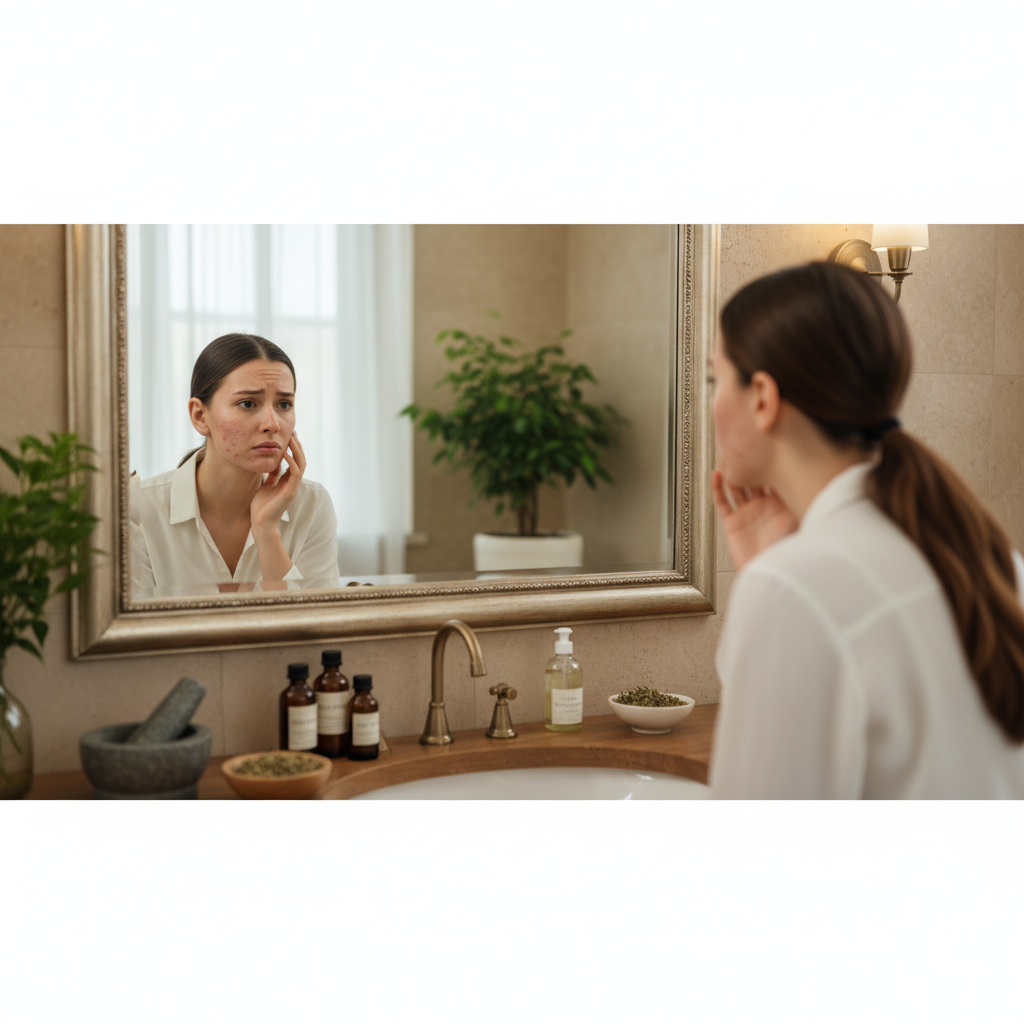
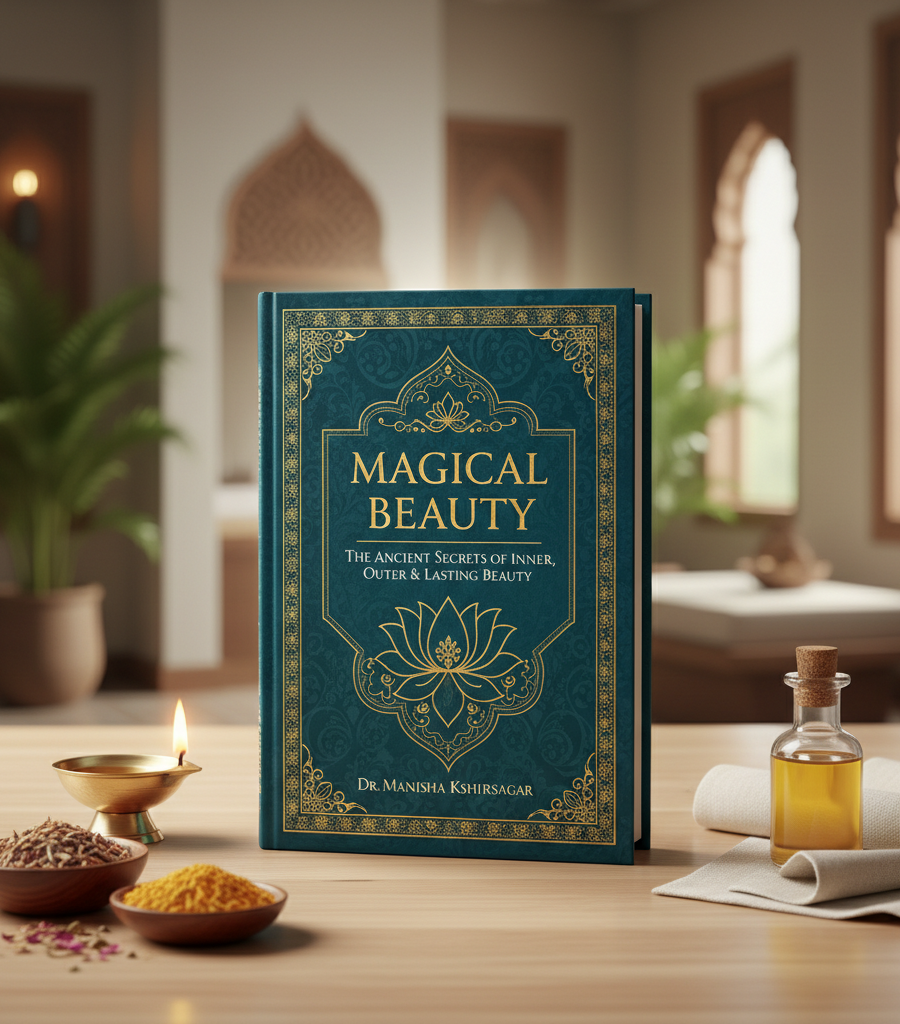
Hey dear, today we’re going to talk about natural skin care! These recipes I’m going to share with you are inspired by a great book – "Enchanting Beauty: Ancient Secrets to Inner, Outer & Lasting Beauty" by Dr. Manisha Kshirsagar. The whole philosophy is very simple: a gentle routine, natural ingredients, and support for skin that looks fresh, without any aggressive treatments. Sounds good, right?
Why is natural skin care a real winner?
First and foremost, you know exactly what you’re putting on your skin! No more mysterious ingredients with strange names.
Let’s be real, a 2 to 3-step routine is the most comfortable to follow every day. Who has time for complicated rituals?
The best part is that many of the ingredients for cleansing and hydration are already in your home, in the kitchen!
Ayurveda and skin types – finding your dosha
Ayurveda has an interesting approach – it views the skin through the prism of so-called dosha dominance. This is great because it helps you choose textures and ingredients that will perfectly suit *your* skin.
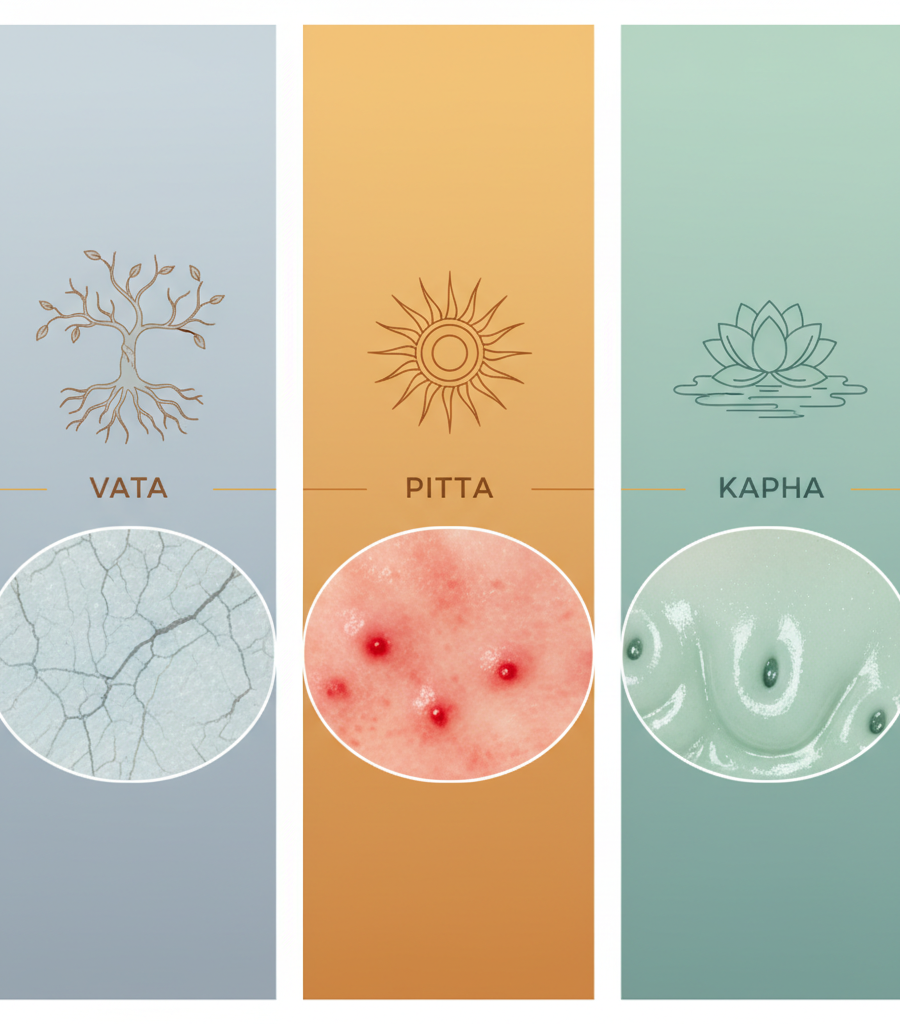
Vata Skin
How to recognize it:
It is usually dry, thin, delicate, and has fine pores. It can often feel tight and is prone to fine lines, especially when we are under stress or haven't had enough sleep.
What Vata skin needs:
The goal is gentle cleansing, plenty of hydration, and even more nourishing fats. Imagine it as a thirsty plant that wants to be watered.
Cleansing recipe for Vata skin:
You will need:
1 teaspoon almond powder
1/2 teaspoon whole milk or coconut milk
Optionally, 1/4 teaspoon Kumari Saar
Preparation and use:
Mix the ingredients until you get a thin paste. Apply a thin layer to the face, then massage with light circular motions for about 20 to 30 seconds. It’s important to rinse it with lukewarm water before it dries so the skin doesn't feel tight.
Nourishing recipe for Vata skin:
Ingredients:
1 teaspoon almond oil
1 to 2 drops of lavender or chamomile essential oil (these are fantastic for calming!)
5 to 6 drops of water
Optionally, 3 to 4 drops of Kumari Saar
How to use it:
Simply apply to the face and neck, then massage gently for about a minute. Then, let it absorb. Your skin will thank you!
Pitta Skin
How to recognize it:
This skin is fair, warm to the touch, and of medium thickness. When in balance, it has a beautiful rosy or golden tone. However, it is prone to redness, sun sensitivity, freckles, and moles.
Routine goal:
The focus here is on cooling, calming, and minimizing irritation. Imagine it as a volcano you want to soothe.
Cleansing recipe for Pitta skin:
You will need:
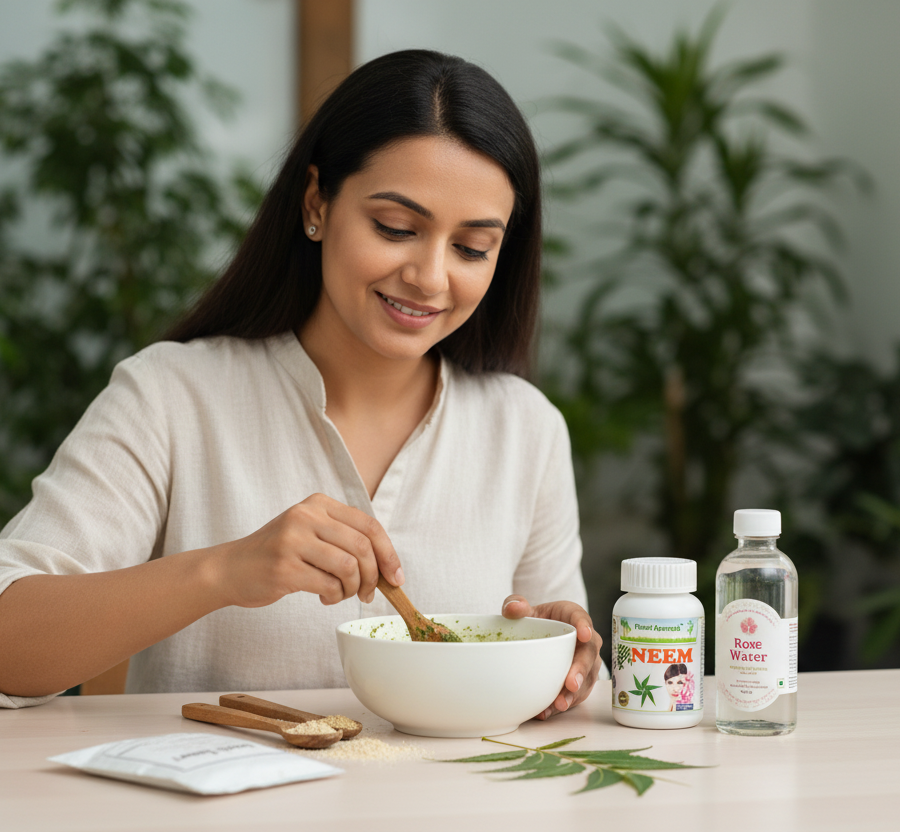
1 teaspoon lentil flour
1/2 teaspoon Neem (if in capsules, just open them and take a small part of the powder)
1 to 2 teaspoons water or rose water
Use:
Make a paste, apply it to the face, and let it sit for 30 to 60 seconds. Rinse with cold water before it dries. Believe me, cold water works wonders for Pitta skin!
Moisturizing recipe for Pitta skin:
Ingredients:
1 teaspoon jojoba oil
1 to 2 drops of geranium essential oil (smells wonderful and calms!)
Optionally, 2 to 3 drops of Kumari Saar
Use:
Apply and massage gently, then let it work. It's easy and effective!
Kapha Skin
How to recognize it:
This skin is thicker, moister, and cool to the touch. It is often prone to clogged pores and can have a shine or a feeling of "heaviness" when the routine is too oily.
Routine goal:
Deeper cleansing, lighter textures, and avoiding heavy creams are needed. Kapha wants to breathe!
Cleansing recipe for Kapha skin:
Ingredients:
1/2 teaspoon honey
1/2 teaspoon lemon juice (great for cleansing!)
Use:
Apply to the face, leave for 30 seconds, then rinse. Fast and effective!
Nourishing recipe for Kapha skin:
Ingredients:
1/2 teaspoon sesame oil
1 to 2 drops of lemongrass essential oil
3 to 4 drops of water
Use:
Apply to the face and neck, massage briefly, and let it absorb. No need for much, a little is enough.
3 natural recipes products for face and body – my choice!
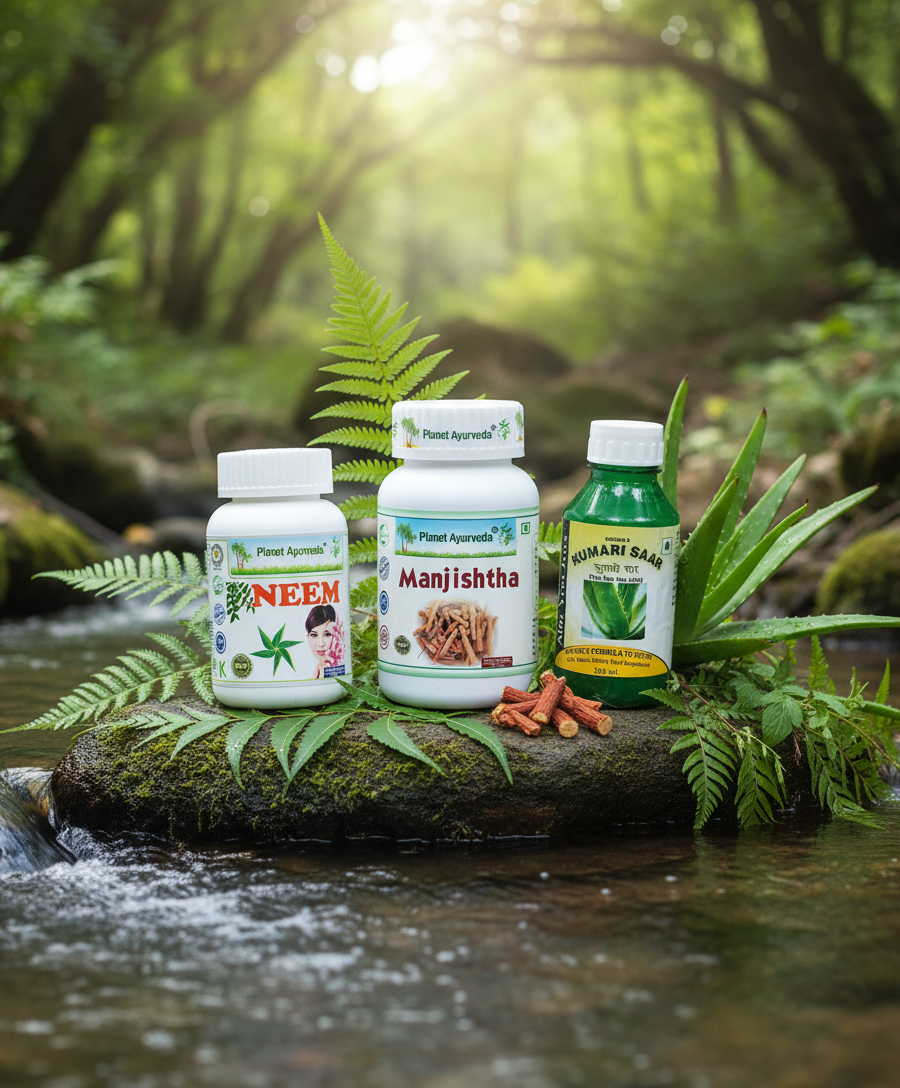
These recipes are great if you want to bring herbal support into your routine without overcomplicating things. Sometimes simple is best!
Recipe 1. Clear pore mask with Neem and honey (great for Pitta and Kapha)
Ingredients:
1/2 teaspoon Neem
1 teaspoon honey
A few drops of water or rose water
Use:
Mix all ingredients until you get a nice mixture. Apply a thin layer, leave for 5 minutes, then rinse with lukewarm water. Afterward, be sure to apply a thin layer of Kumari Saar for calming.
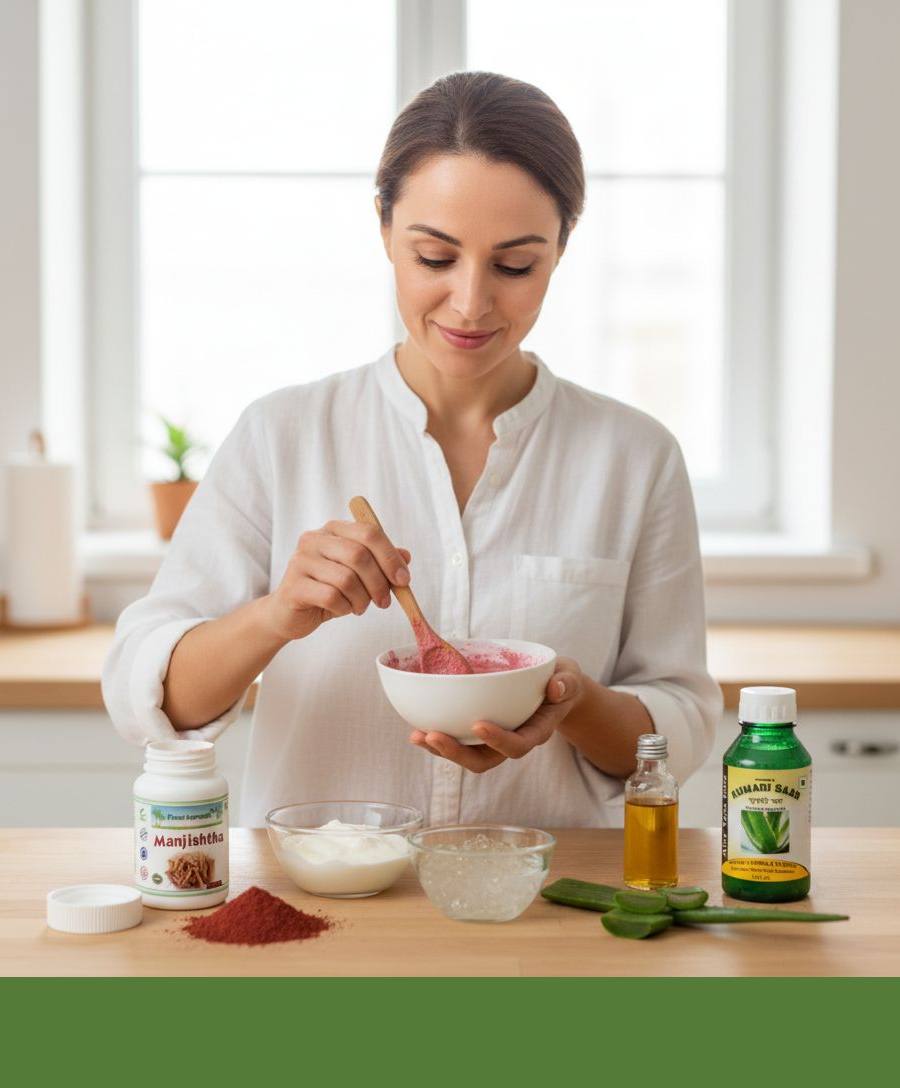
Recipe 2. Even complexion mask with Manjishta (for Pitta, Kapha, and with a little hydration for Vata too)
Ingredients:
1/2 teaspoon Manjishta
1 teaspoon yogurt or aloe gel
If you are a Vata type, add 1/2 teaspoon almond oil – trust me, you'll enjoy it!
Use:
Apply to a clean face. Leave for 7 to 10 minutes, then rinse. Finish with Kumari Saar as a calming, gentle layer. The skin will look fresh and rested!
Recipe 3. Calming after-sun layer with Kumari Saar (for all types, yes!)
Ingredients:
Kumari Saar
Optionally, 2 to 3 drops of rose water
Use:
Apply a thin layer to clean skin after showering, after sunbathing, or whenever you feel heat and tightness. This is my personal favorite for instant relief!
Neem – why is it so good for the skin?
What is its focus?
Neem is excellent for clear skin and pores. A routine with Neem is ideal when you have shine, clogged pores, or imperfections. I can say it is a true lifesaver for problematic skin.
How to fit it into your routine?
Use it as a short mask with honey or lentil flour.
As part of a gentle cleansing, once or twice a week. Don't overdo it, but be consistent.
Why is it used at all?
Neem is traditionally used to balance skin that easily "heats up" and gets irritated. It is also very effective in routines for skin prone to imperfections. It's fantastic!
Manjishta – for an even complexion!
What is its focus?
Manjishta is here to support a more even complexion and give the skin a fresh look. I think it's a great choice when you want that "purified" look without using aggressive peels.
How to fit it in?
Make a mask with yogurt or aloe gel.
Combine it with Kumari Saar after the mask for extra calming.
Why is it used?
Manjishta is traditionally used in Ayurvedic routines for skin with uneven tone and a tired complexion. Old, proven wisdom!
Kumari Saar – your hydration savior!
What is its focus?
This is my favorite choice for calming and hydration. It's great when the skin is dry, tight, or sensitive to heat and sun. Trust me, you'll love it!
How to fit it in?
As a thin layer after cleansing – it's the first step for hydrated skin.
As an after-sun routine for face, neck, and hands. Instant relief, I guarantee it!
As an additive in pastes for Vata and Pitta to get an even softer finish.
Why is it used?
Kumari Saar is based on aloe. And aloe, as we know, is magical for that feeling of a cool, calming layer and for better skin comfort. I can't live without it!
Mini routine by skin type (fast and practical – for every day!)
Vata
Gentle cleansing with almond paste.
A few drops of oil – the skin will drink it up well.
A thin layer of Kumari Saar if you feel tightness.
Pitta
Cleansing with lentil flour and Neem.
Light jojoba oil.
Kumari Saar after sun or when you notice redness.
Kapha
Honey and lemon cleansing, short and sweet.
A light layer of oil, as little as possible.
Neem mask once a week when pores are clogged – that's the secret.
Final message from me
Natural care shouldn't be complicated, but it does require discipline. Choose a routine that suits your skin type. Be persistent and stick to it for 2 to 3 weeks, then adjust if necessary. You know, the skin likes consistency, and you want results. A perfect deal, right?
References:
Kshirsagar, M., Murphy, M. M. (2015). Enchanting Beauty: Ancient Secrets to Inner, Outer & Lasting Beauty. Lotus Press. ISBN: 9780940676336. eBay+1
Totad, C. D., et al. (2023). A critical review on Skin Care Routine according to Ayurveda. Journal of Ayurveda and Integrated Medical Sciences (JAIMS). Jaims
Suwarna, U. V., et al. (2018). Variation in skin hydration based on Deha Prakriti (body constitution): A cross-sectional observational study. PMC
Rashmi, T. M., et al. (2021). Earliest details of dermatology by Ayurveda. PMC
Baby, A. R., et al. (2022). Azadirachta indica (Neem) as a Potential Natural Active for Dermocosmetic and Topical Products: A Narrative Review. Cosmetics. MDPI
Alzohairy, M. A. (2016). Therapeutics Role of Azadirachta indica (Neem) and Their Active Constituents in Diseases Prevention and Treatment. PMC
Wen, M., et al. (2022). A comprehensive review of Rubia cordifolia L.: Traditional uses, phytochemistry and pharmacology. PMC
Hekmatpou, D., et al. (2019). The Effect of Aloe Vera Clinical Trials on Prevention and Healing of Skin Wound: A Systematic Review. PMC
Zagórska-Dziok, M., et al. (2017). Evaluation of clinical effectiveness of Aloe vera: a review. jpccr.eu
Available in the US
Products in this area of wellness
Traditionally used in the areas this article covers. They are not treatments for any condition, and nothing here is a recommendation for you specifically.
Disclosure: some links below are affiliate links. If you buy through them, AyurvedaGrid may earn a commission at no extra cost to you, and those products are listed first. Which products are relevant at all comes from the topic of the article — nothing here is a recommendation for you specifically.
- Exfoliating Face Scrub(opens in a new tab)affiliateSri Sri Tattva USA· Scrub
Skin care, applied topically — exfoliation
- Extra Nourishing Moisturizer(opens in a new tab)affiliateSri Sri Tattva USA· Moisturizer
Skin care, applied topically — dry skin
- Neem – Skin, Cleanse & Liver Support(opens in a new tab)affiliateSri Sri Tattva USA· Tablet
Supports skin from within — clear skin from within
These statements have not been evaluated by the Food and Drug Administration. These products are not intended to diagnose, treat, cure or prevent any disease. Speak to your own healthcare provider before starting a supplement, particularly if you are pregnant, nursing, or taking medication.
Continue reading
 Ayurvedic Basics & Doshas
What is Ayurveda: A Complete Guide for Beginners and Healthy Living
Discover the power of Ayurveda: A comprehensive guide to the 5,000-year-old "Science of Life." Learn how to identify your unique doshas (Vata, Pitta, and Kapha), how to kindle your digestive fire (Agni), and how to integrate ancient rituals and powerful herbs into a modern lifestyle for perfect balance and longevity.
 Ayurveda
Turmeric as a Remedy: Benefits, Uses, and Best Recipes
This blog post serves as a comprehensive guide to the power of the "golden spice" – turmeric. The text explains in detail the anti-inflammatory and antioxidant properties of curcumin, its application for chronic pain, digestive issues, and boosting immunity. In addition to scientific facts, the post offers practical recipes for "golden milk" and tea, as well as recommendations for high-quality supplements for maximum results.
 Ayurveda
Natural home remedies everyone should know: Your kitchen as a pharmacy
Discover 19 simple and powerful home remedies from your kitchen that help with coughing, digestive issues, headaches, and boosting immunity. Learn how the ancient Ayurvedic wisdom can help you improve your health in a natural way.
Your Ayurvedic overview
Curious about your own constitution?
Take the free guided assessment and receive your personal Ayurvedic overview — about ten minutes, private to your account.
Start Your Journey