
Natural remedy for depression - Ayurvedic tips and solutions
Medically reviewed by Dr Girish Shirke, M.D. (Ayurved)September 5, 2026

Depression is much more than passing sadness – it is a complex condition that deeply affects our way of thinking, feeling, and functioning in daily life. In today's fast-paced world, where pressures are numerous, more and more people are looking for a natural remedy for depression, something that will offer a long-term solution without side effects, something that will act fundamentally.
Ayurveda, this ancient science of life, has long viewed depression as a disturbance of internal energy. It does not stop at just treating the symptoms. On the contrary, Ayurveda focuses on the root of the problem – which is establishing the lost balance between mind, body, and spirit, which is actually the key to true healing.

The Ayurvedic View of Depression: The Balance of Doshas
According to Ayurvedic philosophy, our mental health is inextricably linked to the balance of the three doshas – Vata, Pitta, and Kapha. Depression, in most cases, stems from an imbalance in these doshas:
Increased Kapha: When the Kapha dosha is out of balance, we often feel heavy, with "mental fog," sleep more than usual, and simply lack motivation. A kind of inertia occurs that is difficult to overcome.
Disturbed Vata: Vata instability manifests through fear, anxiety, sleep problems, and a general sense of insecurity and instability. The mind seems as if it never rests.
Low Ojas Levels: Ojas is a less known but crucial term. It is the subtle energy that supports our immunity and, most importantly, our happiness. When Ojas is low, we become much more susceptible to negative emotions and find it difficult to cope with stress.
Recognizing the Signs: How Does Depression Manifest?
Understanding the symptoms is the first and most important step toward healing. They can be subtle, almost imperceptible, but their long-term presence unequivocally indicates a need for change.
Emotional and Mental Signs
Unfulfillment and Emptiness: Constant sadness or a painful feeling that nothing makes sense, no matter how hard we try.
Anhedonia: Loss of interest in hobbies and activities that used to bring us joy. Everything seems boring and hopeless.
Cognitive Difficulties: Problems with concentration, a feeling of "forgetfulness," and great difficulty in making even the simplest decisions.
Low Self-Esteem: Excessive feelings of guilt, which are often unjustified, and constant self-criticism that exhausts us.
Physical Symptoms of Depression

Depression is not just "in the head," nor is it only a mental state. It often manifests through the body – psychosomatic symptoms that should not be ignored:
Chronic Fatigue: A feeling of exhaustion that does not go away even after a long sleep.
Changes in Appetite: This can be either emotional overeating (often associated with Kapha dosha) or a complete loss of appetite (more associated with Vata). Weight can fluctuate drastically.
Psychosomatic Pains: Frequent back pain, muscle pain, headaches... which have no obvious physical cause.
How Can I Get Out of Depression? Natural Strategies and Ayurveda
I believe that a way out is absolutely possible, but it requires commitment and the introduction of healthy routines that truly nourish our nervous system.
1. Sattvic Diet: Food for Mind and Body
The food we consume has a direct impact on our mind. To fight depression, according to Ayurveda, fresh, warm, easily digestible food is recommended – without too many spices, but rich in nutrients. Avoid processed sugar, greasy and heavy food, which only further increases the Kapha dosha and makes us more sluggish.
2. Physical Activity and Yoga: Movement for Energy

Exercise, even moderate, stimulates the flow of energy (Prana) through the body. Yoga poses such as "Sun Salutation" (Surya Namaskar) are excellent for removing stagnation in the body and mind, bringing vitality and freshness.
3. Meditation and Pranayama: Calming the Mind
Deep breathing techniques (Pranayama) are exceptionally effective for calming the Vata dosha. They reduce the level of stress hormones and bring an immediate sense of presence and inner peace. Meditation, even for a few minutes a day, can work wonders for mental stability.
The Best Ayurvedic Herbs as Support for Mental Health
In our quest for balance, " " offers powerful, natural extracts that can help regulate the chemical balance in the brain in a completely natural way. I personally believe these herbs are a true gift from nature.
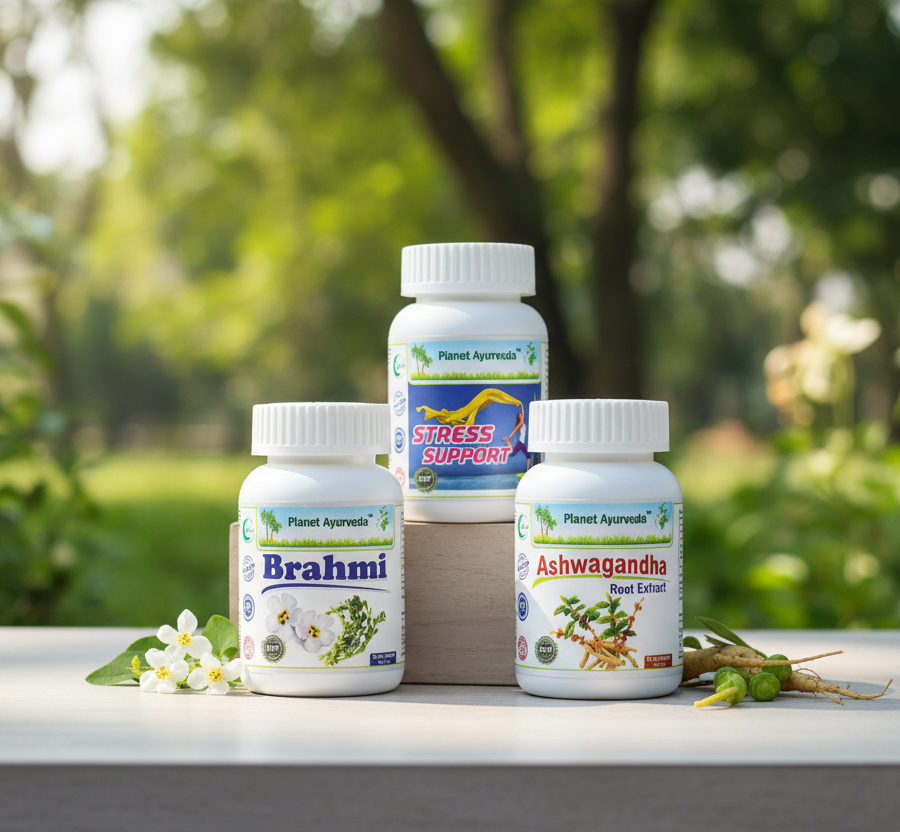
Stress Support – Your Ally Against Anxiety
This formula represents a powerful combination of Ashwagandha, Brahmi, and Tagar. I think it is excellent because:
It calms excessive excitation of the nervous system.
It helps improve sleep quality, which is crucial for mental health.
It significantly reduces cortisol levels – the stress hormone.
Ashwagandha – The Queen of Adaptogens
Ashwagandha is probably the most famous natural remedy for depression and stress. It truly helps the body adapt to emotional challenges, gives strength, and eliminates mental exhaustion. From my experience, the results are noticeable.
Brahmi – Food for the Brain
Brahmi is known for its ability to regenerate brain cells and improve mental clarity. It is ideal for those who feel mental fog and a depressive mood associated with cognitive fatigue. I call it the "brain elixir."
CLICK HERE to view the full range of mental health products from "."
Difference Between Chronic and Severe Depression: Why Is It Important to Know?
It is vital to recognize the severity of the condition, as it dictates the approach to treatment:
Chronic Depression (Dysthymia): This is a long period of low mood, often lasting for years. Ayurveda offers great help here through long-term lifestyle changes, focusing on stability and consistency.
Severe (Clinical) Depression: This is a condition that requires immediate professional help, often including medical intervention. But even in these situations, natural methods, especially Ayurvedic ones, can be excellent support to conventional therapy, making the recovery process more complete.
Conclusion: Your Path to Emotional Freedom
Depression does not define you, never forget that. With the right combination of Ayurvedic practices – from dietary changes and supplements to meditation and the use of natural supplements from – you can truly find your inner glow again. Don't wait for symptoms to become too heavy – start your transformation today, because every step matters.
Do you need a more detailed consultation to choose the right Ayurvedic approach? Do not hesitate, contact us! We are here to help you on your path to balance and well-being.
References and Scientific Sources
In preparing this text, renowned sources in the field of traditional Ayurveda were consulted, as well as modern clinical studies confirming the effects of the mentioned herbs:
1. Scientific Studies on Ashwagandha (Withania somnifera)
A prospective, randomized, double-blind, placebo-controlled study of the safety and efficacy of a high-concentration full-spectrum extract of Ashwagandha root in reducing stress and anxiety in adults. (Indian Journal of Psychological Medicine)
Key Conclusion: Ashwagandha significantly reduces serum cortisol levels and improves quality of life in people under stress.
2. Scientific Studies on Brahmi (Bacopa monnieri)
Effects of a standardized Bacopa monnieri extract on cognitive performance, anxiety, and depression in the elderly. (Evidence-Based Complementary and Alternative Medicine)
Key Conclusion: Brahmi shows positive effects in reducing depressive mood and improving cognitive functions in subjects.
3. Ayurvedic Approach to Mental Health
Ayurvedic management of depressive disorders: A review. (Journal of Ayurveda and Integrative Medicine)
Description: Review of traditional Ayurvedic treatments, including balancing Vata and Kapha doshas through diet and herbs.
4. General Information on Depression and Mental Health
World Health Organization (WHO) - Depression Fact Sheet.
Description: Global data on signs, symptoms, and the importance of timely treatment of depression.
5. - Traditional Formulations
Dr. Vikram Chauhan - "Ayurvedic Medicine: Gentle Healing for Your Body, Mind, and Spirit".
Description: This book serves as a foundation for understanding formulations like Stress Support and the use of pure herbal extracts in modern Ayurvedic practice.
Available in the US
Products in this area of wellness
Traditionally used in the areas this article covers. They are not treatments for any condition, and nothing here is a recommendation for you specifically.
Disclosure: some links below are affiliate links. If you buy through them, AyurvedaGrid may earn a commission at no extra cost to you, and those products are listed first. Which products are relevant at all comes from the topic of the article — nothing here is a recommendation for you specifically.
- Ashwagandha - Calming Stress Relief(opens in a new tab)affiliateSri Sri Tattva USA· Tablet
Supports a calm mind and restful sleep — everyday stress and calm
- Brahmi (Bacopa) - Memory & Focus(opens in a new tab)affiliateSri Sri Tattva USA· Tablet
Supports focus and mental clarity — memory and concentration
- Deep-SLP - Sleep Well(opens in a new tab)affiliateSri Sri Tattva USA· Tablet
Supports a calm mind and restful sleep — occasional sleeplessness
These statements have not been evaluated by the Food and Drug Administration. These products are not intended to diagnose, treat, cure or prevent any disease. Speak to your own healthcare provider before starting a supplement, particularly if you are pregnant, nursing, or taking medication.
Continue reading
 Ayurvedic Basics & Doshas
What is Ayurveda: A Complete Guide for Beginners and Healthy Living
Discover the power of Ayurveda: A comprehensive guide to the 5,000-year-old "Science of Life." Learn how to identify your unique doshas (Vata, Pitta, and Kapha), how to kindle your digestive fire (Agni), and how to integrate ancient rituals and powerful herbs into a modern lifestyle for perfect balance and longevity.
 Ayurveda
Turmeric as a Remedy: Benefits, Uses, and Best Recipes
This blog post serves as a comprehensive guide to the power of the "golden spice" – turmeric. The text explains in detail the anti-inflammatory and antioxidant properties of curcumin, its application for chronic pain, digestive issues, and boosting immunity. In addition to scientific facts, the post offers practical recipes for "golden milk" and tea, as well as recommendations for high-quality supplements for maximum results.
 Ayurveda
Natural home remedies everyone should know: Your kitchen as a pharmacy
Discover 19 simple and powerful home remedies from your kitchen that help with coughing, digestive issues, headaches, and boosting immunity. Learn how the ancient Ayurvedic wisdom can help you improve your health in a natural way.
Your Ayurvedic overview
Curious about your own constitution?
Take the free guided assessment and receive your personal Ayurvedic overview — about ten minutes, private to your account.
Start Your Journey