
Managing Weight Loss Hormones: A Natural Guide to Balance

We live in an era where the fitness industry constantly promises "miraculous" results overnight, and markets are flooded with all sorts of "magic" fat-burning potions. Despite all this, many people face the same frustrating problem: even with strict diets and strenuous exercise, the number on the scale not only refuses to budge but sometimes even increases.

If this sounds familiar, believe me – the culprit might not be your lack of effort, but something much more subtle: your hormones. They are literally the chemical conductors of our body, controlling metabolism, appetite, and the way we store fat. In the following lines, we will explore how to recognize and, more importantly, how to manage the key hormones that play a role in the weight loss process, so you can finally achieve your health goals.
1. Leptin: The "Voice of Satiety" that Often Goes Unheard

Leptin, a hormone produced in our fat cells, has one very important task: to signal the brain that we have enough energy and that it is time to stop eating.
But herein lies an often unforeseen problem: in overweight individuals, a condition called leptin resistance frequently occurs. Although the level of this hormone is high – the body produces it, but the brain does not register the signal of fullness. The result is that constant, nagging hunger that drives us to overeat, even though we have consumed enough food.
How to Improve Leptin Sensitivity?
Reduce Fructose: Excess artificial sugars and especially high-fructose corn syrup (present in soft drinks, processed sweets, and various ready-made dressings) are directly linked to developing leptin resistance. Try to limit their consumption.
Quality Sleep is Essential: One of the most common causes of imbalance is lack of sleep. It raises ghrelin (the hunger hormone) and simultaneously lowers leptin, leading to uncontrolled cravings and snacking.
Watch Your Diet: My advice is to focus on natural, unprocessed foods instead of industrially produced food. This means more fresh fruits, vegetables, whole grains, and healthy proteins.
2. Cortisol: The Stress Hormone that Loves to Deposit Fat Around the Belly

Cortisol is a hormone secreted by the adrenal glands in response to stress. While absolutely necessary for our survival, chronically high levels of cortisol are, unfortunately, "enemy number one" when it comes to our waistline.
When we are under constant stress, cortisol signals the body to hold onto energy reserves, turning blood sugar into visceral fat – that stubborn fat that accumulates around the internal organs in the abdomen.
Strategies for Cortisol Control:
Relaxation Techniques: Regularly practicing yoga, meditation, or simple walks in nature can significantly calm the nervous system and lower cortisol levels.
Reduce Caffeine: Excessive amounts of coffee can further stimulate cortisol secretion, especially if you are sensitive to it. Try to limit intake to one or two cups a day.
Natural Support: The product Stress Support is, in my opinion, an excellent herbal ally that can help in dealing with daily stress and improve sleep quality.
3. Estrogen and Its Complex Role in Women
Estrogen is key to women's reproductive health, but its imbalance – whether levels are too high or too low – very often leads to weight gain. This is particularly noticeable in the hip area and lower abdomen, characteristic of the menopause period.
How to Restore Balance?
To maintain optimal female health and hormonal balance, natural supplements are recommended:
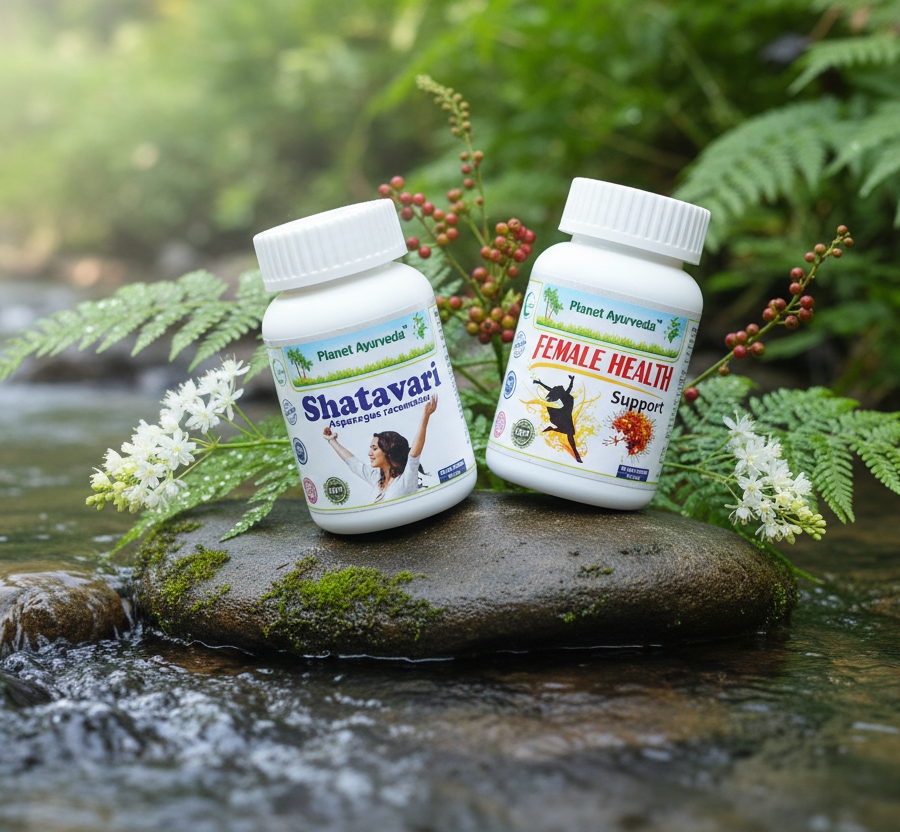
Female Health Support: This formulation is specifically designed to regulate the female cycle and hormonal balance.
Shatavari: Shatavari is one of the most powerful herbs in Ayurveda, well known for its ability to support the reproductive system and contribute to hormonal balance in women.
4. Testosterone: The Engine for Muscle Mass and Accelerated Metabolism
Testosterone is not just a "male hormone" – it is extremely important for both sexes. Therefore, low levels of testosterone can lead to loss of muscle mass and a slowing of metabolism, which inevitably makes gaining weight easier.

How to Naturally Increase Testosterone?
Weight Training: Resistance exercises (weightlifting) are, according to numerous studies, the most effective way to stimulate natural testosterone production in the body.
Nutrient-Rich Diet: Optimal intake of proteins and healthy fats (such as omega-3) is key for proper hormonal synthesis. Don't forget fruits and vegetables for necessary vitamins and minerals.
Adaptogenic Herbs: Research confirms that herbs like Ashwagandha and Tribulus Terrestris significantly help in raising testosterone levels naturally, which is an excellent solution for those seeking natural support.
Conclusion: Listen Carefully to Your Body
Weight loss, as we see, is not always simple calorie math. Very often, it is a complex biological process managed by hormones. With a balanced diet, regular physical activity, and the choice of the right natural supplements, you can bring your hormones back into balance and achieve the results you desire and deserve.
Are you ready to take control of your health and take a step toward a better version of yourself? Check out our offer of natural Ayurvedic products, specially designed to support metabolism and hormonal balance.
Literature and Scientific Sources Used
Relevant studies in the fields of endocrinology, nutrition, and phytotherapy were consulted for the preparation of this text:
On Leptin and Leptin Resistance:
Myers, M. G., et al. (2012). "Mechanisms of Leptin Action and Resistance." – A study explaining the mechanism of leptin in the brain.
On the Impact of Fructose on Hormones:
Shapiro, A., et al. (2008). "Fructose-induced leptin resistance exacerbates weight gain in rats." – Scientific evidence of the link between sugars and hormonal hunger.
On Cortisol and Stress:
Epel, E., et al. (2001). "Stress may add bite to appetite in women: a laboratory study of cortisol and eating behavior." – Research on how stress directly affects increased appetite.
On Ashwagandha and Testosterone:
Wankhede, S., et al. (2015). "Examining the effect of Withania somnifera supplementation on muscle strength and recovery." – A clinical study proving an increase in testosterone and muscle mass.
Link to the study (Journal of the International Society of Sports Nutrition)
On Tribulus Terrestris and Hormonal Support:
Qureshi, A., et al. (2014). "A systematic review on the herbal extract Tribulus terrestris and the roots of its putative aphrodisiac and performance enhancing effect." – A comprehensive review of the effects of this herb.
On Sleep and Metabolism:
Taheri, S., et al. (2004). "Short Sleep Duration Is Associated with Reduced Leptin, Elevated Ghrelin, and Increased Body Mass Index." – A key study on the link between sleep and obesity.
Available in the US
Products in this area of wellness
Traditionally used in the areas this article covers. They are not treatments for any condition, and nothing here is a recommendation for you specifically.
Disclosure: some links below are affiliate links. If you buy through them, AyurvedaGrid may earn a commission at no extra cost to you, and those products are listed first. Which products are relevant at all comes from the topic of the article — nothing here is a recommendation for you specifically.
- Great After 40 Fenugreek Oil Capsules(opens in a new tab)affiliateSri Sri Tattva USA· Capsule
Supports a healthy metabolism and weight — midlife metabolic support
- Kapha Balancing Kit(opens in a new tab)affiliateSri Sri Tattva USA· Kit
Supports a healthy metabolism and weight — kapha balance, lightness
- Nisaamlaki - Pancreas & Immunity(opens in a new tab)affiliateSri Sri Tattva USA· Tablet
Supports already-healthy blood sugar
These statements have not been evaluated by the Food and Drug Administration. These products are not intended to diagnose, treat, cure or prevent any disease. Speak to your own healthcare provider before starting a supplement, particularly if you are pregnant, nursing, or taking medication.
Continue reading
 Ayurvedic Basics & Doshas
What is Ayurveda: A Complete Guide for Beginners and Healthy Living
Discover the power of Ayurveda: A comprehensive guide to the 5,000-year-old "Science of Life." Learn how to identify your unique doshas (Vata, Pitta, and Kapha), how to kindle your digestive fire (Agni), and how to integrate ancient rituals and powerful herbs into a modern lifestyle for perfect balance and longevity.
 Ayurveda
Turmeric as a Remedy: Benefits, Uses, and Best Recipes
This blog post serves as a comprehensive guide to the power of the "golden spice" – turmeric. The text explains in detail the anti-inflammatory and antioxidant properties of curcumin, its application for chronic pain, digestive issues, and boosting immunity. In addition to scientific facts, the post offers practical recipes for "golden milk" and tea, as well as recommendations for high-quality supplements for maximum results.
 Ayurveda
Natural home remedies everyone should know: Your kitchen as a pharmacy
Discover 19 simple and powerful home remedies from your kitchen that help with coughing, digestive issues, headaches, and boosting immunity. Learn how the ancient Ayurvedic wisdom can help you improve your health in a natural way.
Your Ayurvedic overview
Curious about your own constitution?
Take the free guided assessment and receive your personal Ayurvedic overview — about ten minutes, private to your account.
Start Your Journey