
Lung Cancer: Ayurvedic Support Alongside Medical Treatment
Medically reviewed by Dr Girish Shirke, M.D. (Ayurved)August 31, 2026
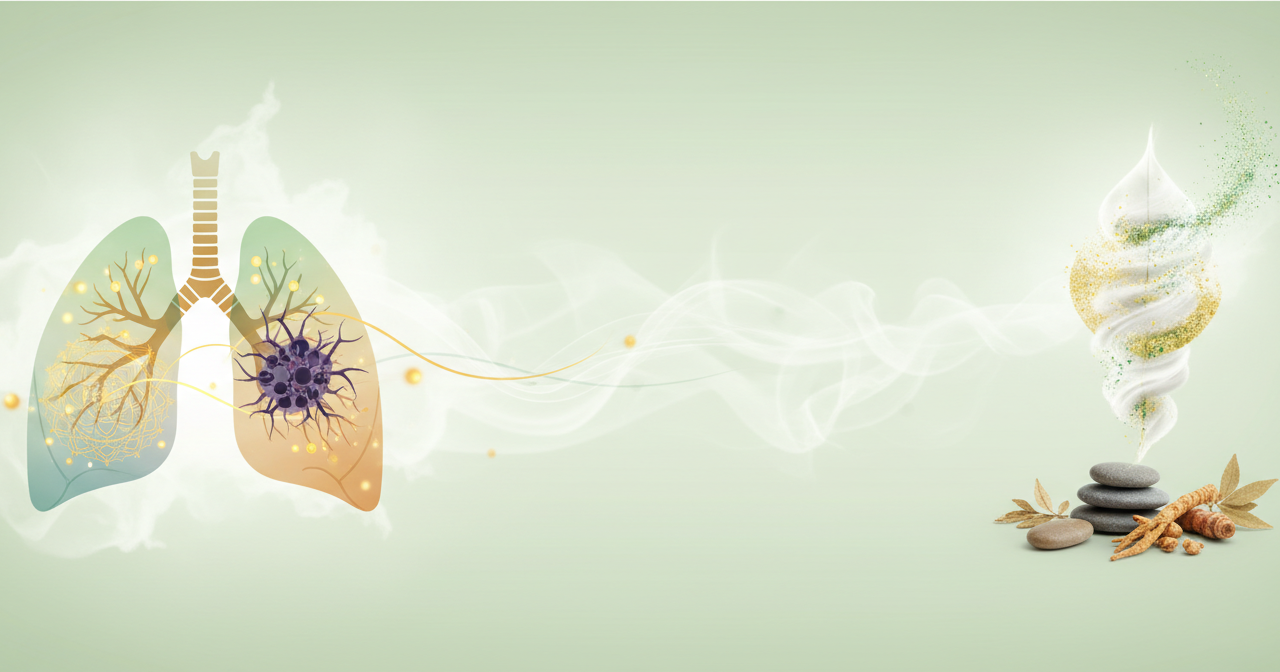
Medical care comes first. Cancer is diagnosed and treated by oncology specialists. The practices described here are traditional supportive measures some people use alongside that care — none of them treats cancer, and none is a substitute for oncological treatment. Discuss any supplement with your oncologist first: several, curcumin included, interact with chemotherapy agents and anticoagulants.
When faced with a diagnosis like lung cancer, life suddenly takes on a new dimension. It is one of the greatest challenges a person can encounter. And while modern medicine indeed offers powerful, often aggressive treatments, more and more people are turning to Ayurveda – not as a replacement, but as a complementary approach. The goal is clear: strengthening the entire organism, alleviating the unpleasant side effects of conventional therapy, and, most importantly, improving the quality of life.
As someone with years of experience in holistic approaches, I believe that Ayurveda offers profound wisdom for supporting the body. In this text, we will explore how applies this ancient knowledge and powerful herbs to support the respiratory system during difficult times.

Understanding Lung Cancer: What Do We Need to Know?
Lung cancer is, in short, a malignant tumor that begins in the tissues of the airways – most often in the cells that line them. It is one of the most widespread and serious types of cancer globally. Despite all the advances in medicine, the true key to success, in my experience, lies in early detection and a strong, resilient immune system.
Causes and Key Risk Factors: What Puts Us at Risk?
To effectively protect ourselves, we must first understand the causes and risk factors. Some of the most important are:
Smoking, active and passive: This is, without a doubt, the most common cause – responsible for over 80% of all cases. Even passive smoking is a serious risk.
Air pollution: We live in a time when exposure to PM particles and industrial gases is inevitable in many urban environments. This is a major challenge for our lungs.
Occupational exposure: Some professions involve regular contact with harmful substances such as asbestos, radon, arsenic, or nickel. Protection in the workplace is of vital importance.
Genetic predisposition: If you have a family history of lung cancer, the risk is somewhat increased.
Weakened immunity and chronic inflammation: Long-term inflammatory processes in the lungs can reduce their resistance and pave the way for more serious conditions.
Symptoms You Should Never Ignore
One of the biggest problems with lung cancer is that in the early stages, it is often "silent." This means it does not show many obvious signs. Therefore, it is extremely important to pay attention to your body and consult a doctor if you notice:
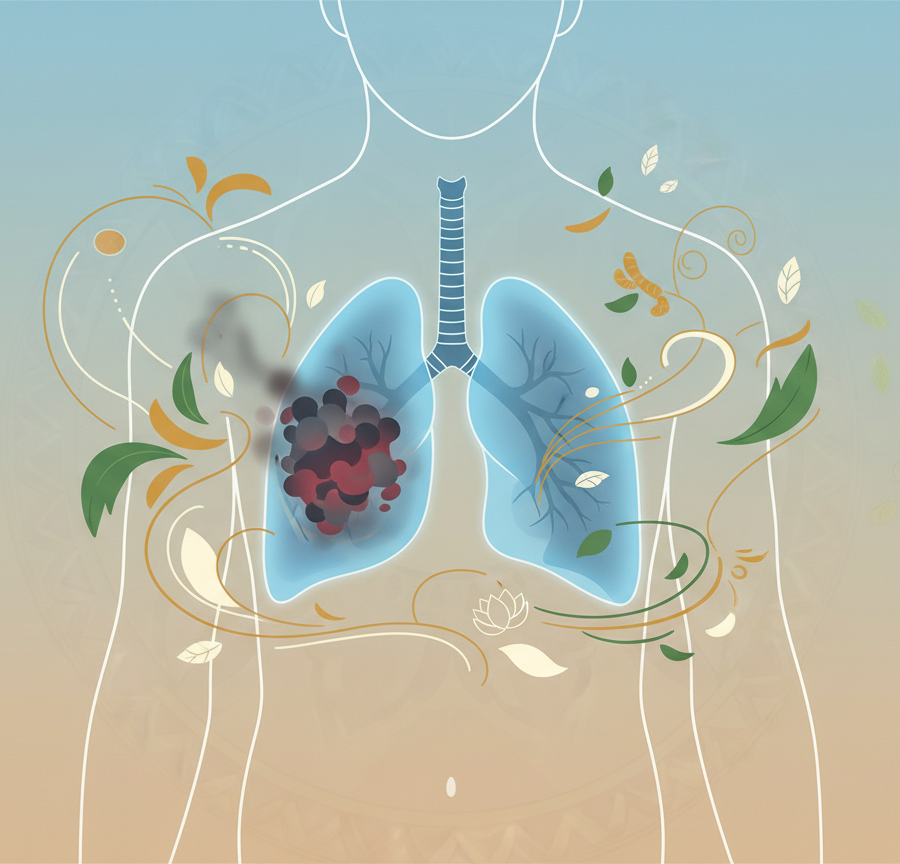
Chronic cough that persists for more than 2-3 weeks and does not go away.
Chest pain, especially if it intensifies during deep breathing or coughing.
Coughing up blood (hemoptysis), even in small amounts. This always requires immediate medical evaluation.
Difficulty breathing (dyspnea) or sudden and unexplained hoarseness of the voice.
Unexplained weight loss and constant, exhausting fatigue.
The Ayurvedic Perspective: Cancer as "Arbuda"
Ayurveda does not view cancer merely as a localized disease. According to its philosophy, it is a systemic disorder, often called Arbuda. This condition, from an Ayurvedic point of view, stems from several key factors:
Imbalance of the Three Doshas: Most often, in such conditions, Kapha (responsible for growth and tissue formation) and Pitta (associated with inflammatory processes) dominate.
Accumulation of Ama (Toxins): Accumulated toxins in the cells, often as a result of poor digestion and metabolism, play a key role.
Low Agni (Digestive fire): When the digestive fire is weak, the body cannot metabolize nutrients efficiently, nor can it eliminate waste.
Given this, the goal is much deeper than just symptomatic relief. They strive to restore balance to the body through thorough detoxification, strengthening immunity (what Ayurveda calls Ojas), and supporting cellular regeneration.
Powerful Ayurvedic Herbs for Lung Support
Nature offers us incredible gifts, and uses this wisdom to create natural supplements that can help the body fight cellular degeneration. Here are some key herbs:

1. Curcumin (Haridra)
Turmeric, often called the "queen of spices" or the "queen of anti-inflammatory herbs," is a true treasure. Its active component, curcumin, is studied for anti-inflammatory and antioxidant activity. Laboratory work has examined how it behaves against tumour cells, but that research has not shown curcumin to treat lung cancer or to slow its spread in people.
2. Ashwagandha
This powerful herb is known as an adaptogen – a substance that helps the body adapt to and cope with stress. In the fight against diseases like cancer, physical and mental stress are immense. Ashwagandha increases vitality and improves cellular resistance, making the body more resilient.
3. Kanchanar Guggulu
This classic Ayurvedic formula is known for its ability to "dissolve" tumorous formations and cysts. It is excellent for purifying the lymphatic system and can help reduce swelling in the body – something often associated with cancer complications.
4. Tulsi (Holy Basil)
The Tulsi herb is a true gem for respiratory health. Not only does it help expel excess mucus and facilitate breathing, but it also acts as a natural antibiotic and powerful antioxidant. I always recommend it for lung support.
5. Triphala
Triphala is a combination of three fruits and is absolutely crucial for detoxification. A clean colon means better absorption of all other medicinal herbs you consume, making this product an indispensable part of the holistic approach.
Don't wait! Order these natural products immediately and begin your journey toward better health.
Diet and Lifestyle: An Ayurvedic Guide for Every Day
Diet is the foundation of our health, and in Ayurveda, this is particularly emphasized. Proper nutrition can significantly support the body in the fight against cancer.

Table: Recommended Foods vs. Foods to Avoid
Food Group | Recommended (YES) | Avoid (NO) |
Vegetables | Broccoli, carrots, spinach, zucchini – fresh and lightly cooked | Canned or fried vegetables, which burden the digestive system |
Fruits | Pomegranate, papaya, apples, berries – full of antioxidants | Too much acidic fruit, which can create imbalance |
Spices | Turmeric, ginger, garlic, black pepper – have strong medicinal properties | Too spicy and overly salted, which can irritate the system |
Beverages | Golden milk, Tulsi tea, warm water – hydrate and heal | Carbonated drinks, alcohol, cold water – cool the digestive fire |
Homemade Support Recipes You Can Try
Golden Milk (Haldi Doodh): My personal favorite. One teaspoon of turmeric in a cup of warm plant-based milk with a little black pepper (for better absorption) before bed can work wonders for immunity.
Ginger and Honey Syrup: Freshly squeezed ginger juice mixed with honey is excellent for soothing coughs and the throat.
Breathing Exercises and Spiritual Support: The Lungs as a Mirror of the Soul
In Ayurveda, and in many other holistic traditions, the lungs are closely connected to life, but also to emotions like grief. Therefore, emotional healing is just as, if not more, crucial than physical healing.

Pranayama (Anulom Vilom): This alternate nostril breathing technique is incredibly effective. It clears energy channels (nadis), calms the mind, and, most importantly, brings more oxygen into the blood.
Meditation: Just 15 minutes of meditation a day can significantly reduce cortisol levels (the stress hormone) and activate the body's natural self-healing mechanisms.
In Conclusion: Ayurveda as an Ally, Not a Replacement
It is important to understand: Ayurvedic treatment is never intended as a replacement for conventional medicine, especially when it comes to serious diseases like cancer. On the contrary, I consider it its best ally. With an intelligent combination of herbs from, a healthy and conscious diet, and a positive, calm mind, the path to recovery becomes easier, more complete, and, above all, more natural.
Are you ready to take control of your health? Perhaps you would like a personalized consultation?
Feel free to contact the experts. They are here to help.
Contact Phone: 070 350 446
References and Scientific Sources
For the preparation of this text and support of the Ayurvedic approach, references from renowned medical databases such as PubMed, NCBI, and Cancer Research were used.
1. Curcumin and its Effect on Lung Cancer
In cell-culture and animal studies, curcumin has been observed to slow the growth of cancer cell lines and, in some models, to interact with chemotherapy agents. These are preclinical findings only — they have not been shown to translate into a clinical benefit for people with lung cancer.
Source: Curcumin and Cancer: An "Old-Age" Disease with an "Age-Old" Solution
Focus: Therapeutic potential of curcumin in various types of tumors.
2. Ashwagandha (Withania somnifera) as an Anticancer Agent
Laboratory studies have observed withanolides from Ashwagandha inducing apoptosis (programmed cell death) in cultured lung cancer cells. This is cell-culture research and does not demonstrate an effect in people.
Source: Withania somnifera: Multitargeting herbal medicine for cancer management
Link: ScienceDirect / Journal of Ayurveda and Integrative Medicine
3. Tulsi (Holy Basil) and Respiratory Protection
Tulsi contains phytochemicals that help protect cells from oxidative stress and damage caused by radiation.
Source: Tulsi - Ocimum sanctum: A herb for all reasons
Link: PubMed Central (PMC)
4. Kanchanar Guggulu and Tumor Management (Arbuda)
Scientific reviews on the traditional use of Kanchanar Guggulu in the treatment of lymphatic disorders and neoplasms.
Source: Ayurvedic Management of Arbuda (Tumors)
5. Holistic Approach and Quality of Life
The National Cancer Institute (NCI) recognizes Ayurveda as a complementary approach in patient care.
Source: Ayurvedic Medicine (PDQ®) – Health Professional Version
Continue reading
 Ayurvedic Basics & Doshas
What is Ayurveda: A Complete Guide for Beginners and Healthy Living
Discover the power of Ayurveda: A comprehensive guide to the 5,000-year-old "Science of Life." Learn how to identify your unique doshas (Vata, Pitta, and Kapha), how to kindle your digestive fire (Agni), and how to integrate ancient rituals and powerful herbs into a modern lifestyle for perfect balance and longevity.
 Ayurveda
Turmeric as a Remedy: Benefits, Uses, and Best Recipes
This blog post serves as a comprehensive guide to the power of the "golden spice" – turmeric. The text explains in detail the anti-inflammatory and antioxidant properties of curcumin, its application for chronic pain, digestive issues, and boosting immunity. In addition to scientific facts, the post offers practical recipes for "golden milk" and tea, as well as recommendations for high-quality supplements for maximum results.
 Ayurveda
Natural home remedies everyone should know: Your kitchen as a pharmacy
Discover 19 simple and powerful home remedies from your kitchen that help with coughing, digestive issues, headaches, and boosting immunity. Learn how the ancient Ayurvedic wisdom can help you improve your health in a natural way.
Your Ayurvedic overview
Curious about your own constitution?
Take the free guided assessment and receive your personal Ayurvedic overview — about ten minutes, private to your account.
Start Your Journey