
Hormonal Balance: A Complete Ayurvedic Guide for Women
Medically reviewed by Dr Girish Shirke, M.D. (Ayurved)September 5, 2026
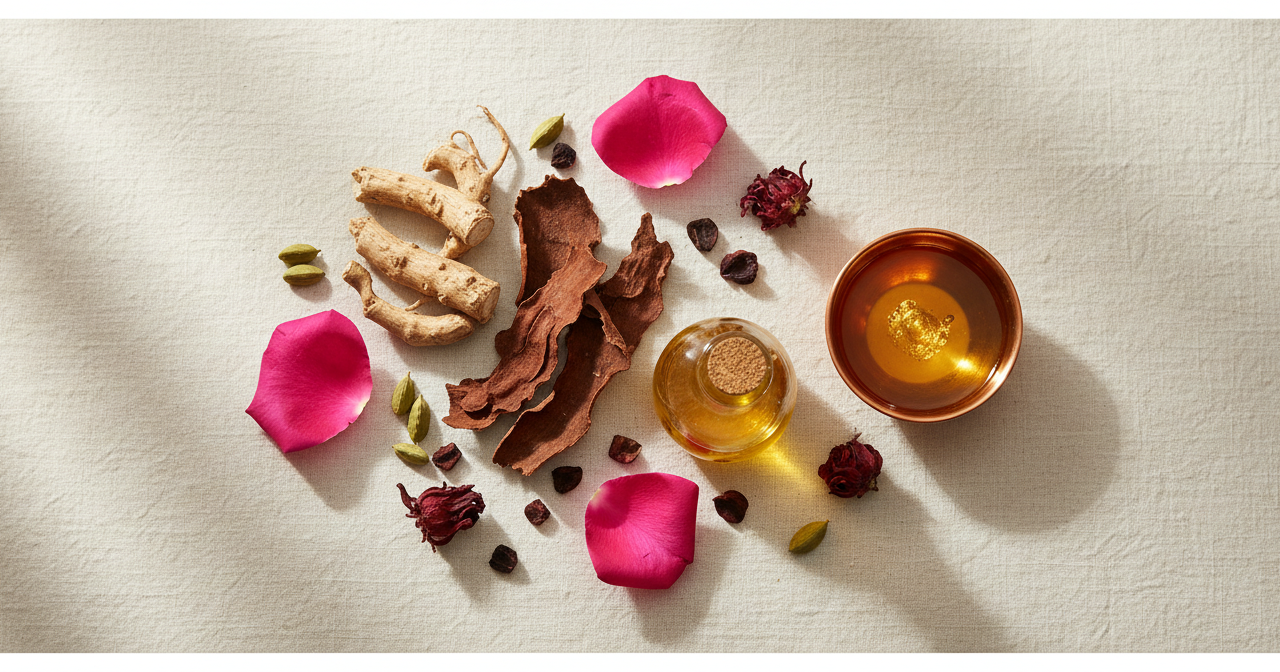
Hormones are not enemies — they only ask to be heard
Painful menstruation, weight gain, disturbed sleep, depression and anxiety, difficulty conceiving
These are not "women's things" that "should be endured." They are clear signals that the endocrine system is asking for help — and Ayurveda has 5,000 years of experience in listening and responding to those signals.
In Western medicine, hormonal imbalance is often treated with contraceptive pills, hormone replacement therapy, or metformin — drugs that control symptoms but rarely address the root cause. Ayurveda asks differently: Why did the hormones go out of balance? Which doshas are disturbed? How is the Agni? Where has Ama accumulated?
The answer to these questions is personalized — and that is exactly the strength of the Ayurvedic approach.
New to Ayurveda? Read first: What is Ayurveda — A Guide for Beginners
01. Ayurveda and the Female Hormonal System
1.1 Hormones through the prism of the doshas
Ayurveda does not name hormones by their biochemical designations, but it describes the functional system that exactly corresponds to what modern endocrinology calls the "hormonal system":
Dosha | Hormonal connection | When disturbed |
|---|---|---|
Vata | Nervous system, adrenal glands, cyclic regularity | Irregular cycle, anxiety, insomnia, vaginal dryness |
Pitta | Metabolism, thyroid gland, inflammatory processes | PMS with anger, inflammation of the ovaries, hyperandrogenism (PCOS) |
Kapha | Reproductive tissues, estrogen, lactation, fertility | Cysts, fibroids, thickened uterine lining, obesity |
Most hormonal disorders in women involve a combination of the doshas — and that is why Ayurvedic treatment is multidimensional.
1.2 Artava — The Menstrual Cycle in Ayurveda
Ayurveda calls the female menstrual cycle Artava (Ārtava) and considers it one of the most important indicators of a woman's overall health. Healthy menstruation is regular (24–32 day cycle), without pain or with minimal discomfort, lasting 3–5 days, blood bright to dark red without clots, and without excessive fatigue.
Any deviation — pain, irregularity, too much or too little bleeding, PMS — is a diagnostic signal for Ayurveda.
Inducing menstruation naturally: an Ayurvedic approach

02. Seven Signs of Hormonal Imbalance You Must Not Ignore
Ayurveda recognizes the following signs as signals of hormonal imbalance:
Irregular or painful menstrual cycle
Vata and Pitta imbalance
Acne or skin problems related to the cycle
Excess Pitta, toxic blood
Unexplained weight gain (especially in the abdomen)
Kapha and weak Agni
Chronic fatigue even after sleep
Depletion of Ojas, adrenal fatigue
Mood swings, PMS, anxiety
Vata disturbance, excess Vata in the nervous system
Sleep problems
Irregular Vata, Pitta irritation in the evening
Decreased libido
Depletion of Shukra dhatu (reproductive tissue)
Hormonal imbalance in women: 7 signs you must not ignore
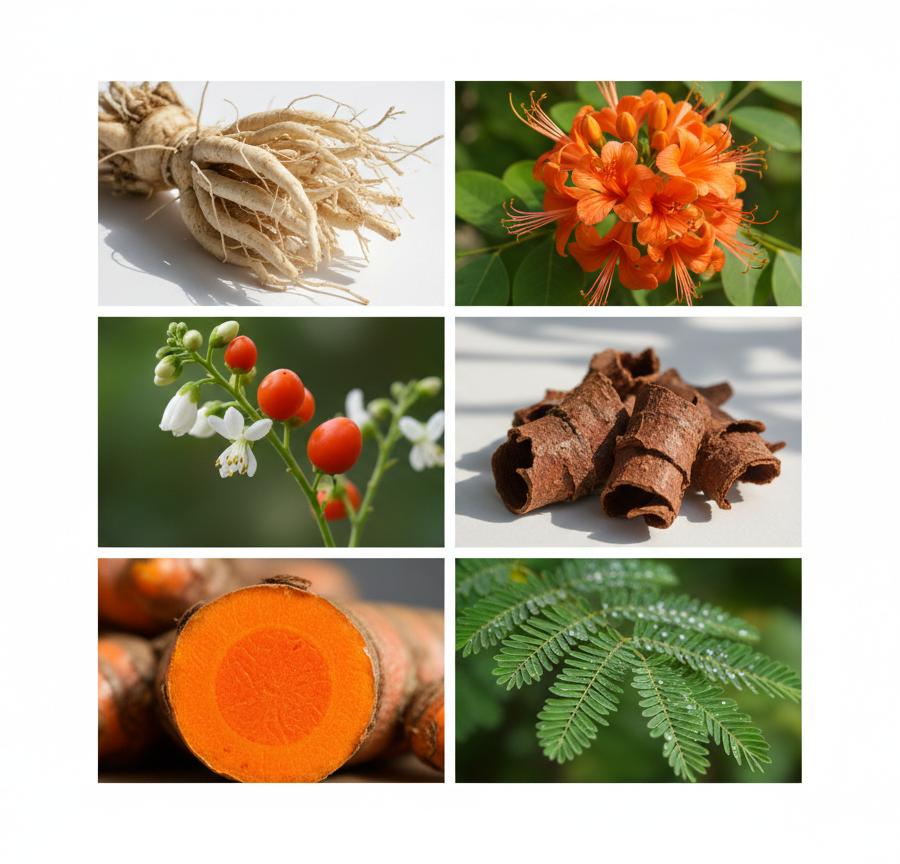
03. Top 6 Ayurvedic Herbs for Female Hormonal Health
3.1 Shatavari
Queen of female herbs
Shatavari / Asparagus racemosus
Shatavari literally means "she who has a hundred husbands" — a metaphor for its distinct reproductive and hormone-balancing properties. It is the primary rasayana for women's health in Ayurveda.
Key active ingredients: steroidal saponins (shatavarins I–IV), polysaccharides, isoflavones, mucilage fibers.
Phytoestrogenic effect: Modulates estrogen receptors — raises estrogen when it is low (menopause), balances it when it is high
LH secretion: Studies show an increase in luteinizing hormone — the key to ovulation
Adaptogenic: Reduces cortisol which suppresses progesterone
Lactogenic: Stimulates lactation in breastfeeding mothers
Vaginal atrophy: Lubricates the mucous membrane — especially useful in perimenopause
Bopana N, Saxena S. "Asparagus racemosus — Ethnopharmacological evaluation and conservation needs." J Ethnopharmacol. 2007. → PubMed PMC4027291
Recommended product: Shatavari Capsules — Female Health | Pure extract, 60 capsules
→ Buy now
3.2 Female Health Support
Complex female formula
Multi-herbal formulation specifically designed for female reproductive health. Contains three key herbs:
Ashoka (Saraca asoca) — "without sorrow" in Sanskrit. Directly acts on the uterus: tones the muscular wall, regulates bleeding, and alleviates menstrual pain.
Shatavari (Asparagus racemosus) — hormonal balancer
Lodhra (Symplocos racemosa) — Pitta-balancing, specifically for inflammation of the ovaries and cervix.
Ideal for: irregular menstruation, painful cycle (dysmenorrhea), excessive bleeding, PCOS, PMS, perimenopause.
Nishteswar K. "Saraca asoca – A Critical Review." J Ayurveda Integr Med. 2014.
→ Female Health Support | 60 capsules
Female Health Support — an ally of the modern woman
3.3 Pradrantak Churna
Specifically for PCOS and Leucorrhea
Pradrantak Churna
Classic Ayurvedic formula for Shweta Pradara (leucorrhea) and Rakta Pradara (excessive bleeding). Especially effective for PCOS.
Composition: Arjuna (Terminalia arjuna), Ashok (Saraca asoca), Udumbur (Ficus racemosa), Lodhra (Symplocos racemosa).
Regulation of the menstrual cycle in PCOS
Reduction of endometrial inflammation
Support for cervical imbalance
Antibacterial and antifungal activity (vaginal flora)
→ Pradrantak Churna | Herbal powder, 200g
3.4 Ashwagandha
The adrenal regulator
Withania somnifera
Chronic stress and cortisol are perhaps the main hormonal disruptors in the modern woman. When cortisol is chronically high:
Progesterone drops (cortisol and progesterone "compete" for the same precursor — pregnenolone)
Thyroid hormones are suppressed
Insulin sensitivity decreases
Libido disappears
Ashwagandha directly breaks this chain: it reduces cortisol, improves thyroid function, and protects the adrenal glands.
Sharma AK et al. "Efficacy and Safety of Ashwagandha Root Extract in Subclinical Hypothyroid Patients." J Altern Complement Med. 2018. → PubMed 28829155
3.5 Ashoka
The uterotonic specialist
Saraca asoca
Fibroids (reduces their progression)
Endometriosis (anti-inflammatory for the endometrium)
Heavy bleeding (menorrhagia)
Painful menstruation (direct spasmolytic activity)
Kenjale R et al. "Antistress and neurotransmitter modulatory activity of Saraca asoca." J Ethnopharmacol. 2008.
3.6 Curcumin
Anti-inflammatory protection
Chronic inflammation is the common root of PCOS, endometriosis, thyroid Hashimoto's, and many other hormonal conditions.
PCOS: Reduction of insulin resistance and testosterone
Endometriosis: Inhibition of ectopic growth of the endometrium
Menopause: Reduction of hot flashes and improvement of mood
→ Curcumin Capsules
04. Specific Hormonal Conditions: Ayurvedic Protocols
4.1 PCOS — Polycystic Ovary Syndrome
PCOS is a disorder of Pitta and Kapha: inflammation + cyst formation and insulin resistance + cycle irregularity (Vata). A classic tridoshic imbalance.
Herbs
Female Health Support — cycle regulation
Pradrantak Churna — specific for PCOS symptoms
Curcumin — reduction of inflammation
Ashwagandha — insulin sensitivity and cortisol
Diet
Reduce refined sugar and simple carbohydrates
Increase bitter vegetables (Pitta/Kapha balancing)
Main meal at noon, light dinner before 19:00
Spices: turmeric, fenugreek, coriander
Lifestyle
Moderate physical activity (not exhausting — worsens Vata)
Hatha yoga — especially effective for ovarian stimulation
Stress management — directly affects androgens
4.2 Menopause and Perimenopause
Menopause in Ayurveda is a natural Vata phase of life — not a disease, but a transition.
Dosha | Menopause Symptoms |
|---|---|
Vata | Insomnia, vaginal dryness, anxiety, joint pain |
Pitta | Hot flashes, night sweats, irritability, inflammation |
Kapha | Depression, lethargy, weight gain, fluid retention |
Ayurvedic Protocol for Menopause
Shatavari — primary phytoestrogen, vaginal lubrication
Female Health Support — for complex support
Ashwagandha — for insomnia and adrenal support
Brahmi — for cognitive fog and mood
Specific for hot flashes (Pitta): Amla juice, coriander/fennel water
Natural Treatment for Menopause: 8 Tips for Relief
4.3 Fertility and Natural Fertility Enhancement
Ayurveda for fertility works on two levels: Shukra Dhatu (reproductive tissue) and Ojas (vital essence).
Ayurvedic Protocol for Fertility
Shatavari — direct nutrition of the reproductive tissue
Female Health Support — cycle regulation
Amalaki Rasayan — building Ojas
Didarzana (tongue examination) — daily monitoring of Agni
Infertility and Ayurveda: natural treatment
4.4 PMS — Premenstrual Syndrome
PMS is predominantly a Vata and Pitta imbalance — anxiety, anger, pain, fluid retention, sugar cravings.
Quick Ayurvedic solutions for PMS
Warm Abhyanga (self-massage) with sesame oil — "grounds" Vata
Reduce caffeine and refined sugar during the luteal phase
Ghee 1 teaspoon + warm milk in the evening — nutrition for Vata
Female Health Support + Ashwagandha continuously
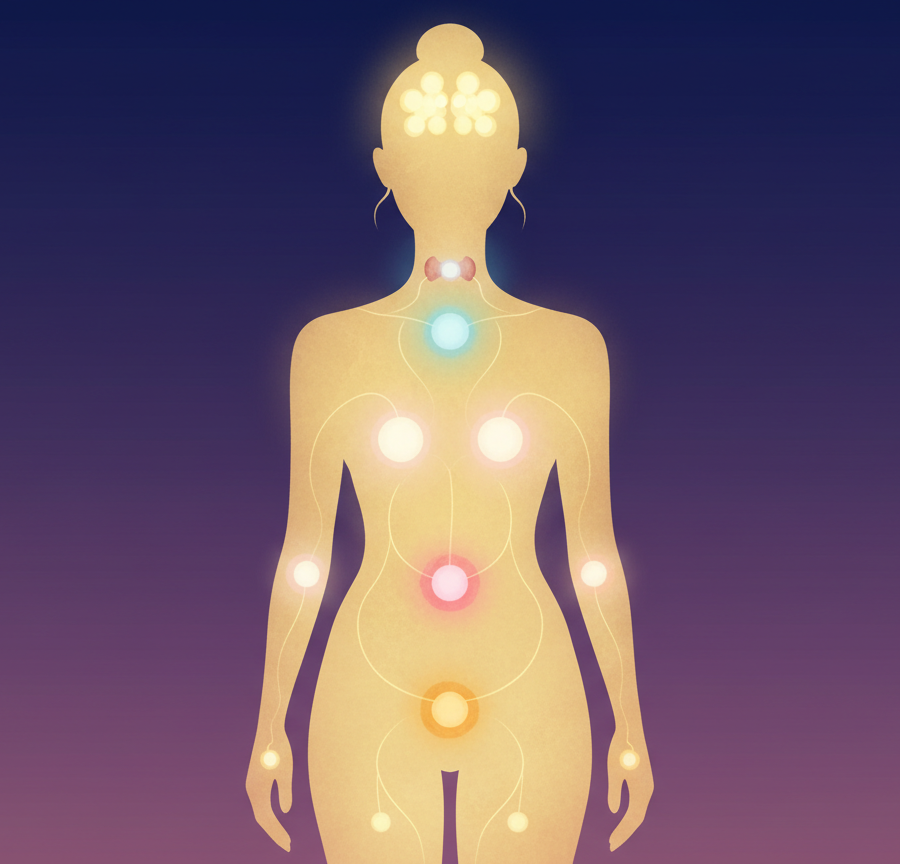
4.5 Hormonal Balance and the Thyroid Gland
The thyroid gland is the main metabolic regulator. Hypothyroidism (Hashimoto's) is a classic Kapha condition. Hyperthyroidism is a Vata/Pitta condition.
Hashimoto's and Ayurveda
Thyroid gland — an Ayurvedic approach

05. Nutrition for Hormonal Balance: Ayurvedic Principles
Hormones are synthesized from fats and proteins — therefore, diet directly affects hormonal health. Ayurveda knows this through the principle of Shukra Dhatu nutrition.
5.1 Foods that nourish the glands
✓ Must include
Ghee — daily, for the synthesis of sex hormones
Coconut oil, raw avocado, sesame oil
Flaxseed, tempeh, miso — phytoestrogens
Seaweed, iodized salt — for thyroid function
Pumpkin seeds, sesame, lentils — Zinc
Dark chocolate, banana, almonds — Magnesium
Banana, prunes, chickpeas — Vitamin B6
✗ Avoid
Refined sugar (increases androgens in PCOS)
Excessive caffeine (depletes the adrenal glands)
Alcohol (directly increases estrogen)
Processed food with trans fats
Plastic packaging for hot food (xenoestrogens)
5.2 Dosha-specific nutrition for hormones
Vata imbalance
Irregular cycle, anxiety, dryness
Warm, oily, sweet diet. Sesame, rice, prunes, dates, warm milk with saffron.
Avoid: cold, raw, dry food, fasting
Pitta imbalance
Inflammation, hot flashes, PMS with anger
Cooling diet: cucumber, coriander, coconut milk, mint.
Avoid: spicy, sour, salty food, alcohol
Kapha imbalance
PCOS, fibroids, obesity
Light, warm, dry-prepared food. Bitter vegetables, lentils, buckwheat, spices.
Avoid: dairy, oily food, sugar
Ayurvedic nutrition for Vata Dosha
Managing hormones for weight loss
06. Lifestyle: Routines that Balance the Endocrine System
6.1 Dinacharya specific for hormones
before 06:00
Waking up before 6:00 — The Pitta/Kapha "hour" is ideal for waking up. Waking up during the Kapha hour causes heaviness throughout the day.
3–5×/week
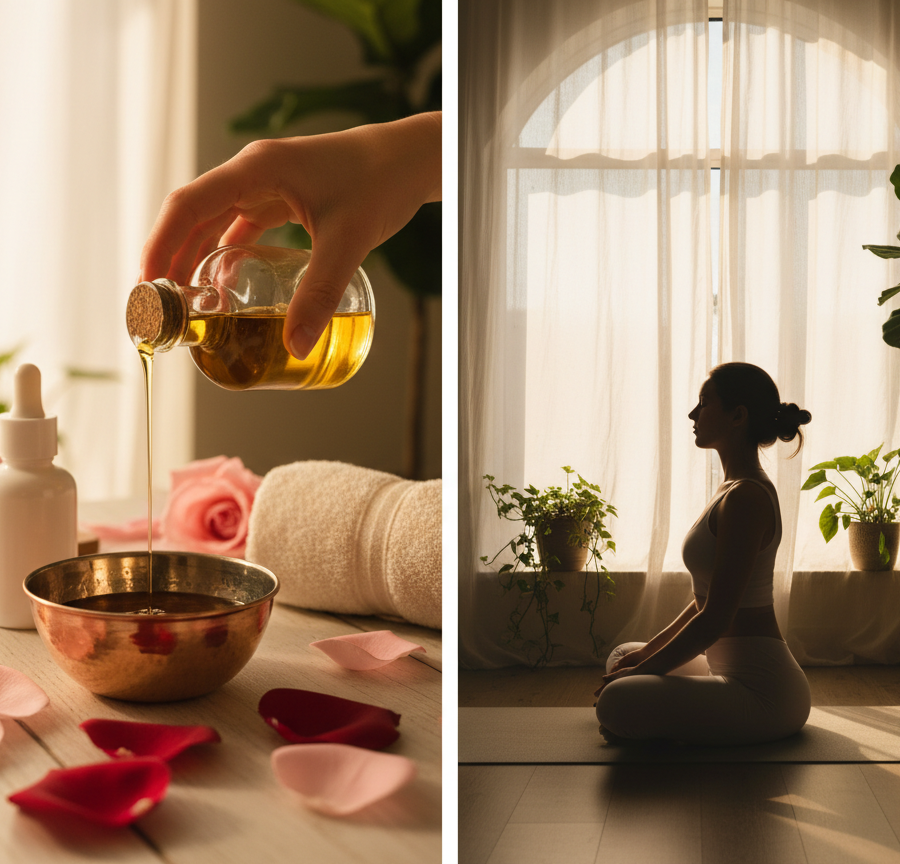
Abhyanga — self-massage with warm sesame oil before showering. It activates the lymphatic system and reduces cortisol.
daily
Kunda Kriya — gentle abdominal massages with warm oil. They support the uterus and ovaries.
before 22:00
Going to bed before 22:00 — melatonin and growth hormone are secreted between 22:00 and 02:00.
6.2 Yoga and Pranayama for hormonal balance
Specific yoga poses for reproductive health
Baddha Konasana (Butterfly pose) — opens the hips, improves blood circulation to the ovaries
Supta Baddha Konasana — passive variant for the luteal phase and menopause
Setu Bandha Sarvangasana (Bridge pose) — stimulates the thyroid gland
Shavasana with abdominal breathing — activates the parasympathetic nervous system
Pranayama
Nadi Shodhana (alternate nostril breathing) — balancing the nervous system
Chandra Bhedi (left nostril) — Pitta cooling, hot flashes
Ayurvedic diet for hormonal balance
07. Pregnancy and Postpartum Period: An Ayurvedic Approach
`
7.1 Garbhini Paricharya — Care for Pregnant Women
Ayurveda has a specific system of care during pregnancy called Garbhini Paricharya — different recommendations for diet, routine, and safe herbs by trimester.
✓ Safe practices
Shatavari — support for lactation and the uterus
Ghee — nutrition for the fetus
Warm sesame oil — abdominal massage (after the 2nd trimester)
✗ Avoid during pregnancy
Ashwagandha (stimulates contractions)
Pradrantak Churna
Ashoka in high doses
Healthy breakfast for pregnant women: 5 recipes for a healthy baby
7.2 Sutika Paricharya — Postpartum Care
The postpartum period is an intense Vata phase. Ayurveda recommends 42 days of intensive Vata-balancing care:
Postpartum protocol
Buttery, warm, easily digestible food
Abdominal massage with sesame oil every day
Shatavari to stimulate lactation
Brahmi Chyawanprash for Ojas restoration
08. Comparison Table: Which Herb for Which Condition?
Condition | Primary herb | Secondary | |
|---|---|---|---|
PCOS | Female Health Support | Pradrantak + Curcumin | → |
Irregular cycle | Female Health Support | Shatavari | → |
Menopause | Shatavari | Ashwagandha + Brahmi | → |
PMS | Ashwagandha | Female Health Support | → |
Fertility | Shatavari | Amalaki Rasayan | → |
Painful menstruation | Female Health Support | Pradrantak Churna | → |
Hormonal stress | Ashwagandha | Brahmi + Shatavari | → |
Hashimoto / Thyroid | Ashwagandha | Curcumin + Kanchnaar Guggul | → |
? Frequently Asked Questions
What are the main causes of hormonal imbalance in women according to Ayurveda?
Ayurveda identifies four main causes: (1) disturbed Agni — weak digestion causes the accumulation of Ama; (2) chronic stress — through cortisol, it suppresses progesterone and thyroid hormones; (3) dosha imbalance — specific to the type of disorder; and (4) disharmonious lifestyle — sleep, diet, seasonal routine.
Can Shatavari be taken continuously?
Yes — Shatavari is classified as a Rasayana, i.e., safe for long-term use. For irregular cycles or menopause, 3–6 months of continuous use is recommended. There are no documented side effects at recommended doses.
Can Ayurveda help with PCOS?+
Ayurveda offers a holistic approach to PCOS that addresses all three aspects: inflammation (with Curcumin and Female Health Support), insulin resistance (with Ashwagandha and Pradrantak Churna), and hormonal imbalance (with Shatavari). Results vary and require 3–6 months of consistent application in combination with dietary changes.
Which Ayurvedic herbs are safe during pregnancy?
Safe during pregnancy (at normal doses): Shatavari, Ghee, Amla. Avoid: Ashwagandha, Pradrantak Churna, Ashoka in therapeutic doses. Always consult your gynecologist and Ayurvedic doctor before taking supplements during pregnancy.
When can I expect results from Ayurvedic treatment?
The first changes (improved mood, sleep regularity, fewer PMS symptoms) are usually noticed in 4–6 weeks. Regularizing the menstrual cycle and improving PCOS markers require 3–6 months. Ayurveda builds health — it does not mask symptoms.
Where can I get a personalized Ayurvedic hormonal plan?
We recommend two approaches: (1) AI Dosha Diagnostics — free online analysis with supplement recommendations; (2) Personal Ayurvedic consultation Girish Shirke for a complete personalized plan.
Is treating bacterial vaginosis naturally effective?
Ayurveda treats bacterial vaginosis through blood purification (Manjishtha, Neem), balancing Pitta and Kapha doshas, and supporting the natural vaginal flora.
Effective natural treatments for bacterial vaginosis
Conclusion: Your Body is Designed for Balance
Hormonal balance is not a luxury — it is your body's natural state. Ayurveda doesn't give you a "hack" to fix your body — it teaches you to listen to its wisdom.
Three key principles to take home
Hormones follow Agni — if digestion is disturbed, the hormonal chain suffers. Start with that.
Stress is the main hormonal disruptor — Ashwagandha + Dinacharya routine + sleep before 22:00 are non-negotiable.
Seasons matter — align herbs and diet with spring/summer/autumn/winter.
Next steps
Understand which doshas are imbalanced in you and get a personalized plan
→ AI Dosha Diagnostics → Female Health Support + Shatavari→ Schedule a consultation
In this guide
More on Hormones & Women
- Bacterial Vaginosis: Everything you need to know about symptoms and natural treatment6 min
- Inducing menstruation naturally: 5 tips4 min
- Female Health Support: An Ode to Femininity – An Ally of the Modern Woman5 min
- Hormonal imbalance in women: 7 signs you must not ignore5 min
- Natural Treatment for Menopause: 8 Tips for Relieving Symptoms7 min
Available in the US
Products in this area of wellness
Traditionally used in the areas this article covers. They are not treatments for any condition, and nothing here is a recommendation for you specifically.
Disclosure: some links below are affiliate links. If you buy through them, AyurvedaGrid may earn a commission at no extra cost to you, and those products are listed first. Which products are relevant at all comes from the topic of the article — nothing here is a recommendation for you specifically.
- Kanchanara - Healthy Hormone(opens in a new tab)affiliateSri Sri Tattva USA· Tablet
Supports hormonal balance — glandular support
- Shatavari – Reproductive Support(opens in a new tab)affiliateSri Sri Tattva USA· Tablet
Supports women's wellness through the cycle
- She’s Active Multi Vitamin For Women(opens in a new tab)affiliateSri Sri Tattva USA· Capsule
Supports women's wellness through the cycle — daily multivitamin
These statements have not been evaluated by the Food and Drug Administration. These products are not intended to diagnose, treat, cure or prevent any disease. Speak to your own healthcare provider before starting a supplement, particularly if you are pregnant, nursing, or taking medication.
Continue reading

Male Infertility and Ayurveda: Tips for Better Fertility
Did you know that sperm quality depends not only on genetics but also on your lifestyle? In this blog post, we reveal how male infertility and Ayurveda are connected and how natural methods can help. From powerful herbs like Ashwagandha and Tribulus to specific yoga poses and nutrition — find out how to restore reproductive vitality and improve your spermogram naturally.
 Ayurvedic Basics & Doshas
What is Ayurveda: A Complete Guide for Beginners and Healthy Living
Discover the power of Ayurveda: A comprehensive guide to the 5,000-year-old "Science of Life." Learn how to identify your unique doshas (Vata, Pitta, and Kapha), how to kindle your digestive fire (Agni), and how to integrate ancient rituals and powerful herbs into a modern lifestyle for perfect balance and longevity.
 Ayurveda
Turmeric as a Remedy: Benefits, Uses, and Best Recipes
This blog post serves as a comprehensive guide to the power of the "golden spice" – turmeric. The text explains in detail the anti-inflammatory and antioxidant properties of curcumin, its application for chronic pain, digestive issues, and boosting immunity. In addition to scientific facts, the post offers practical recipes for "golden milk" and tea, as well as recommendations for high-quality supplements for maximum results.
Your Ayurvedic overview
Curious about your own constitution?
Take the free guided assessment and receive your personal Ayurvedic overview — about ten minutes, private to your account.
Start Your Journey