
Diseases caused by viruses: How to protect yourself naturally
Medically reviewed by Dr Girish Shirke, M.D. (Ayurved)August 31, 2026
In today's fast-paced life, diseases caused by viruses are becoming an increasingly common and complex challenge for our global health. Viruses are not just ordinary pathogens; they are tiny entities that exist on the border between the living and non-living world. Because they cannot survive on their own, they invade our cells to reproduce, often causing serious disruptions in the body.
In my opinion, understanding their nature is a crucial first step toward better prevention and a stronger immunity. It is the foundation upon which we build resilience.
What, exactly, are viruses and how do they infect us?
Viruses are extremely small infectious agents that contain genetic material (DNA or RNA) protected by a protein coat called a capsid. Unlike bacteria, viruses cannot reproduce without a "host," meaning without infecting a living cell. When they enter the human body, they effectively "hijack" healthy cells and force them to produce new viral copies – a type of biological occupation.
How do we classify viruses?
To better understand their behavior and threat, science classifies viruses according to several key characteristics:
Genetic Material: There are DNA viruses, which are more resistant and stable, and RNA viruses which are prone to frequent mutations, such as influenza and coronaviruses. This difference is key to the speed at which they change.
Capsid Structure: Their protective shell can have a helical, icosahedral, or more complex shape. This affects the way they bind to cells and reproduce.
Presence of an Envelope: Some viruses have an additional outer envelope, which makes them more sensitive to external influences like soap and disinfectants. On the other hand, non-enveloped viruses are more resistant, making them a greater threat in some situations.
Most Common Types of Viral Infections
Viruses are quite specific when it comes to who or what they attack, as well as their mode of transmission. Some attack only specific organs, while others can spread throughout the entire system, causing broader symptoms.
1. Respiratory Viruses (Corona and Flu)
These are the most widespread viruses, usually transmitted through tiny droplets in the air that we release when coughing or sneezing.
Coronaviruses: Easily recognizable by their characteristic crown shape. As we gained experience with the pandemic, we know that the most dangerous in this group are SARS-CoV, MERS-CoV, and, of course, the well-known SARS-CoV-2, which caused the COVID-19 pandemic.
Influenza Viruses (Flu): These belong to the Orthomyxoviridae family. Type A is the most dangerous because it constantly mutates and causes large epidemics, while types B and C usually result in much milder symptoms.
2. Stomach Viruses (Gastroenteritis)
These unpleasant viruses, such as norovirus, are most often transmitted through contaminated food or water, as well as through unwashed hands. They cause sudden vomiting, diarrhea, and dehydration, a condition that can be especially dangerous for the youngest and oldest members of society.
3. Zoonotic Viruses
These are viruses that initially circulate in animals but, unfortunately, can jump to humans. The process of a virus jumping from animal to human is becoming more frequent, often due to the disruption of the natural ecological balance, as we have witnessed in recent years.
Mechanism of Reproduction: How the Virus Conquers the Body?
The infection process takes place through five critical phases, which we could imagine as a strategic attack:
Attachment: The virus finds a specific receptor on the surface of the target cell, much like a key fitting into a specific lock.
Entry: Once attached, the virus's genetic material is injected into the host cell.
Synthesis: The cell is forced to stop its normal work and begins producing viral parts, becoming a sort of virus factory.
Assembly: New viral particles are assembled into functional viruses, ready for action.
Release: The infected cell often bursts, releasing thousands of new viruses that then attack neighboring healthy cells, continuing the cycle.
Ayurvedic Approach: Strengthening Immunity through Ojas
While modern medicine often focuses on treating symptoms, Ayurveda offers a different, holistic approach. The key concept in this system is Ojas – our vital energy and natural resilience. My experience tells me that when our internal fire (Agni) is strong, the body handles toxins and pathogens, including viruses, much more easily.
According to Ayurvedic philosophy, diseases caused by viruses are more easily overcome if the organism is in balance. Therefore, Ayurveda recommends a balanced diet, regular physical activity, and the use of powerful herbs that act as immunomodulators, helping the body defend itself.
Natural Support
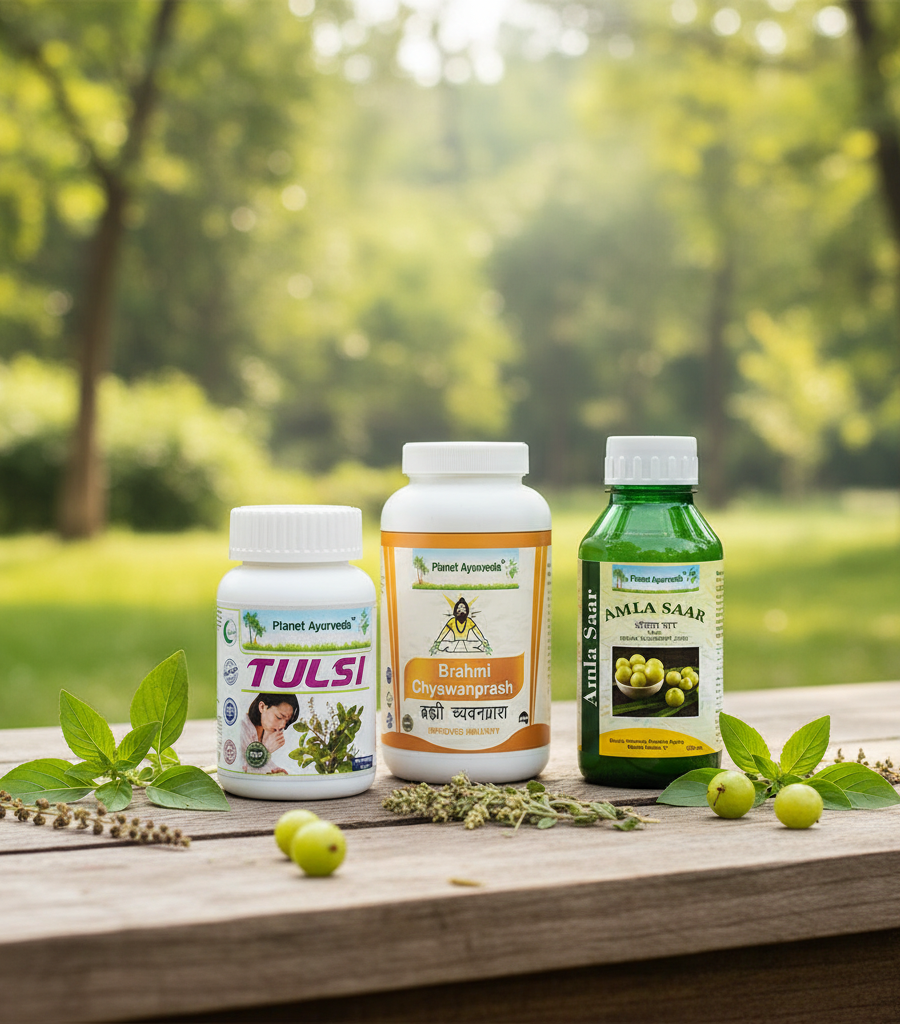
To help your body in the fight against viral threats, the experts at have created products based on thousands of years of old wisdom, backed by modern quality standards. I personally believe these products can offer significant support:
Tulsi (Holy Basil) – This "queen of herbs" is known as a powerful natural antibiotic and antiviral agent. Tulsi helps clear the airways and is excellent for soothing coughs.
Brahmi Chyawanprash – This magical blend of 47 herbs, rich in Vitamin C, is a strong immunostimulant and helps in the faster recovery of the organism after illness. It is a true elixir for vitality!
Amla Saar (Amla Juice) – One of the richest natural sources of Vitamin C, which is key to neutralizing free radicals and effectively cleansing the body of viral toxins.
Curcumin Capsules – The active ingredient of turmeric, which has been studied for anti-inflammatory activity. It is not an antiviral and does not treat viral infections.
Giloy (Tinospora) – Known as the "herb of immortality," Giloy is unsurpassed in the treatment of long-term fevers and strengthening white blood cells, which is vital for immunity.
Don't wait, order your natural protection now:LINK TO THE SHOP
Conclusion: Prevention is the Introduction to Good Health
Diseases caused by viruses are an integral part of our environment, but that doesn't mean we have to spend long days in bed. With an intelligent combination of healthy lifestyle habits and the power of nature found in products, you give your body the best possible chance for defense.
Therefore, choose 100% natural products, without chemicals and additives. Your health deserves the best of Ayurveda! I believe that investing in prevention is the best investment you can make.
Literature and sources used:
1. General Medicine and Virology
These sources cover the scientific basis for viruses, their reproduction, and world health statistics.
World Health Organization (WHO): Information on infectious diseases and pandemics.
Centers for Disease Control and Prevention (CDC): Detailed guides on respiratory and stomach viruses.
Nature Reviews Microbiology: Scientific papers on the mechanisms of viral replication.
National Institute of Allergy and Infectious Diseases (NIAID): Research on SARS, MERS, and flu.
2. Ayurvedic Scientific Research (NCBI / PubMed)
These links lead to specific scientific studies published in the National Center for Biotechnology Information (NCBI), which confirm the effects of the herbs you sell.
Tulsi (Ocimum sanctum): Study on the antiviral and immunomodulatory properties of Holy Basil.
Giloy (Tinospora cordifolia): Research on the immunostimulatory effect of Giloy.
Curcumin (Turmeric): Study on the mechanisms by which curcumin blocks viral infections.
Amla (Emblica officinalis): Scientific review on the high concentration of Vitamin C and antioxidant capacity.
Ayurveda and Immunity (Ojas): Holistic approach to strengthening the immune system.
Available in the US
Products in this area of wellness
Traditionally used in the areas this article covers. They are not treatments for any condition, and nothing here is a recommendation for you specifically.
Disclosure: some links below are affiliate links. If you buy through them, AyurvedaGrid may earn a commission at no extra cost to you, and those products are listed first. Which products are relevant at all comes from the topic of the article — nothing here is a recommendation for you specifically.
- Amla - Immunity & Rejuvenation(opens in a new tab)affiliateSri Sri Tattva USA· Tablet
Supports natural resilience — vitamin c rich rasayana
- Amruth (Guduchi/Giloy) - Immunity Support(opens in a new tab)affiliateSri Sri Tattva USA· Tablet
Supports natural resilience — everyday resilience
- Immunity Kit(opens in a new tab)affiliateSri Sri Tattva USA· Kit
Supports natural resilience — seasonal resilience
These statements have not been evaluated by the Food and Drug Administration. These products are not intended to diagnose, treat, cure or prevent any disease. Speak to your own healthcare provider before starting a supplement, particularly if you are pregnant, nursing, or taking medication.
Continue reading
 Ayurvedic Basics & Doshas
What is Ayurveda: A Complete Guide for Beginners and Healthy Living
Discover the power of Ayurveda: A comprehensive guide to the 5,000-year-old "Science of Life." Learn how to identify your unique doshas (Vata, Pitta, and Kapha), how to kindle your digestive fire (Agni), and how to integrate ancient rituals and powerful herbs into a modern lifestyle for perfect balance and longevity.
 Ayurveda
Turmeric as a Remedy: Benefits, Uses, and Best Recipes
This blog post serves as a comprehensive guide to the power of the "golden spice" – turmeric. The text explains in detail the anti-inflammatory and antioxidant properties of curcumin, its application for chronic pain, digestive issues, and boosting immunity. In addition to scientific facts, the post offers practical recipes for "golden milk" and tea, as well as recommendations for high-quality supplements for maximum results.
 Ayurveda
Natural home remedies everyone should know: Your kitchen as a pharmacy
Discover 19 simple and powerful home remedies from your kitchen that help with coughing, digestive issues, headaches, and boosting immunity. Learn how the ancient Ayurvedic wisdom can help you improve your health in a natural way.
Your Ayurvedic overview
Curious about your own constitution?
Take the free guided assessment and receive your personal Ayurvedic overview — about ten minutes, private to your account.
Start Your Journey