
Diet according to body shape: How to eat properly depending on your body type
Introduction
Our body shape is a complex interplay of genetics, hormones, and the unique way the body stores fat. It is important to understand: there is no "better" or "worse" shape. The difference is primarily in where your body deposits weight and which potential health risks are more commonly associated with a specific pattern. This guide is designed to help you identify your shape and show you how to eat smarter, always focusing on maintaining stable blood sugar, reducing abdominal excess, and increasing energy.
How to quickly determine your body shape:
Take a measuring tape and measure the following body parts: shoulders, chest, waist, hips. Based on these measurements, you will be able to recognize your shape:
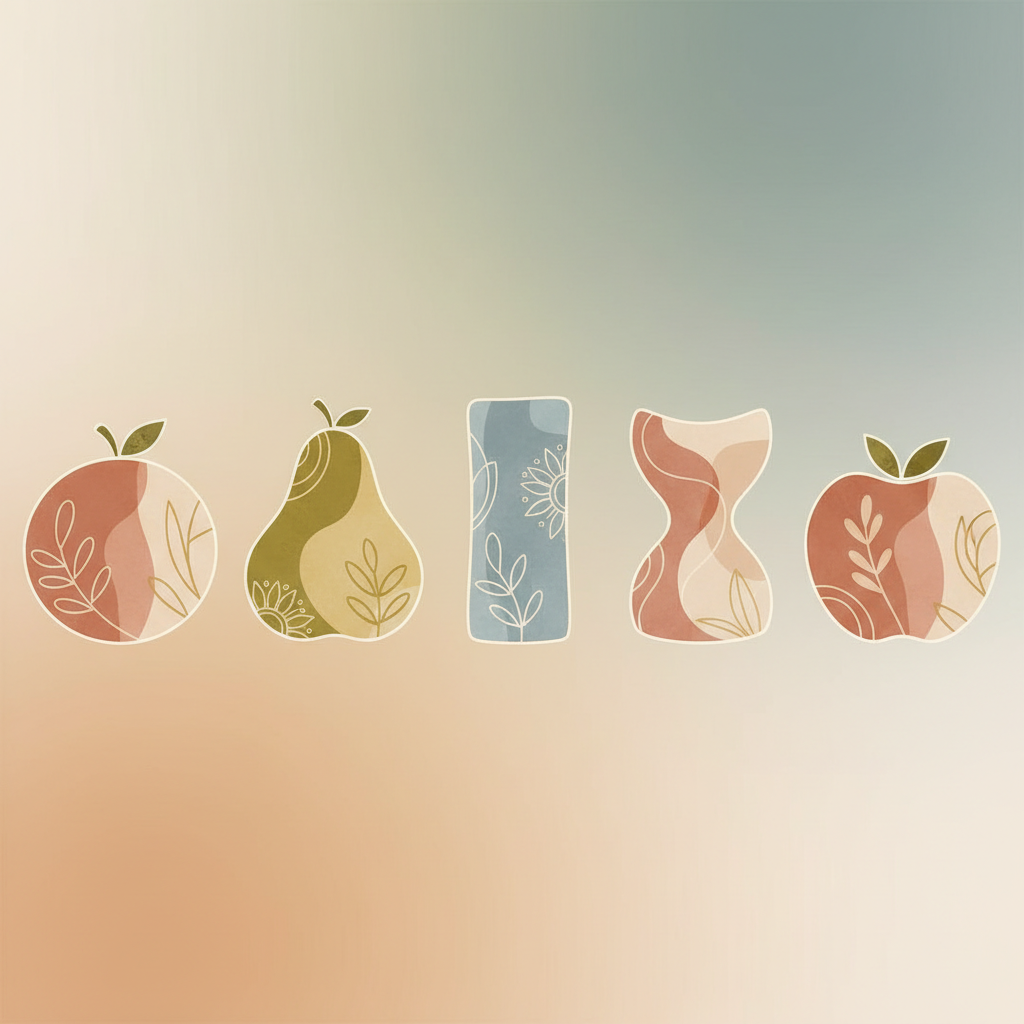
- Apple: The waist is the widest point, while the arms and legs are relatively thinner.
- Pear: The hips and thighs are wider than the upper part of the body.
- Rectangle: The shoulders, waist, and hips are of similar width, with few pronounced curves.
- Hourglass: The shoulders and hips are of similar width, while the waist is significantly narrower.
Apple-Shaped Body
How to Recognize It
People with this shape mostly store weight in the abdominal area, while the hips and legs remain thinner. This pattern is often associated with higher stress levels and increased metabolic risk, especially when the waist circumference grows.
Dietary Goal
For the "apple" type, it is crucial to maintain stable blood sugar. My recommendation is to focus on fiber and protein intake to reduce appetite, as well as to minimize the intake of added sugar and alcohol.
What to Eat More Often
- Fiber-rich vegetables: broccoli, cauliflower, spinach, cabbage.
- High-fiber fruits: raspberries, apples, pears.
- Whole grains: oats, barley.
- Protein in every meal: eggs, fish, chicken, Greek yogurt, legumes.
- Nuts and seeds in small amounts: almonds, walnuts, flaxseed.
What to Limit
- Sweetened drinks and sugary snacks.
- White bread, white pasta, white rice.
- Frequent alcohol, especially in the evening.
Quick daily example
- Breakfast: oats with yogurt and raspberries.
- Lunch: chicken or beans with a large salad and a little brown rice.
- Dinner: fish with steamed vegetables.
Pear-Shaped Body
How to Recognize It
In this shape, weight is predominantly deposited in the hips, thighs, and buttocks. The upper part of the body often remains thinner. After menopause, people with this shape may be at higher risk for loss of bone density, which is important to keep in mind.
Dietary Goal
The diet should be aimed at providing enough protein to maintain muscle mass, as well as calcium and vitamin D through food. It is important to control the intake of saturated fats and refined carbohydrates.
What to Eat More Often
- Healthy fats: salmon, sardines, olive oil, avocado, flaxseed.
- Calcium-rich foods: yogurt, kefir, cheese in moderate amounts, sesame, broccoli, kale.
- Proteins: fish, eggs, turkey meat, legumes.
- Vegetables in every meal, especially leafy greens.
What to Limit
- Fried foods and heavy sauces.
- Butter, cream, large amounts of fatty cheeses.
- Sweets and white flour products, as they easily trigger feelings of hunger.
Quick daily example
- Breakfast: omelet with salad.
- Lunch: fish with broccoli/kale and baked potato.
- Dinner: salad with legumes or yogurt with flaxseed.
Rectangle Shape
How to Recognize It
Individuals with a rectangular shape have similar shoulder and hip widths, with a less pronounced waist. Although they often have a faster metabolism, processed foods can still contribute to the appearance of abdominal excess.
Dietary Goal
The emphasis should be on quality calories rather than "empty" calories. It is important to maintain a stable diet with complex carbohydrates, proteins, and healthy fats.
What to Eat More Often
- Complex carbohydrates: brown rice, whole-grain bread, oats, quinoa.
- Proteins: chicken, turkey meat, beef in moderate amounts, tuna, eggs.
- Good fats: olive oil, nuts, seeds.
- Vegetables and fruit every day.
What to Limit
- Sweetened drinks and juices.
- White bread, white rice, pasta in large portions.
- Snacks with a lot of salt and trans fats.
Quick daily example
- Breakfast: whole-grain toast with eggs and tomato.
- Lunch: tuna or turkey with quinoa and salad.
- Dinner: beef in moderate amounts with vegetables and brown rice.
Hourglass Shape
How to Recognize It
In this shape, the shoulders and hips are of similar width, and the waist is clearly narrower. Weight is often distributed evenly, but irregular meals can lead to blood sugar spikes and an increased desire for snacking – a common problem for this type.
Dietary Goal
The key is the regulation of appetite and blood sugar through regular, balanced meals.
What to Eat More Often
- Grains: barley, millet, oats.
- Oily fish: salmon, mackerel.
- Nuts: almonds, walnuts, hazelnuts in small portions.
- Vegetables: broccoli, cauliflower, spinach, zucchini.
- Protein in every meal to maintain a stable energy level.
What to Limit
- Processed foods with a lot of salt, sugar, and trans fats.
- Sweets after dinner.
- Alcohol, especially frequently and late at night.
Quick daily example
- Breakfast: oats with nuts and an apple.
- Lunch: salmon with salad and millet.
- Dinner: yogurt or eggs with vegetables.
Practical Rules That Work for All Shapes
Regardless of your shape, these universal tips can improve your diet:
- Include protein in every meal.
- Aim to consume 25 to 30 grams of fiber daily through vegetables, fruit, oats, and legumes.
- Keep sweets for special occasions, not as a daily habit.
- Let half of your plate be full of vegetables, one quarter with protein, and the remaining quarter with complex carbohydrates.
- Eat earlier in the evening and avoid late meals after 10:00 PM – there is no need for a "second day"!
Supplement Recommendations from
Apple (Mainly Abdominal Accumulation)
- Stress Support or Ashwagandha: Excellent support for stress and for controlling evening appetite, especially if weight accumulates in the stomach.
- Dia Beta: Helps maintain stable blood sugar, especially when you have strong cravings for sweets.
- Triphala: Supports healthy digestion and regularity, useful during heavy or late meals.
Pear (Hips and Thighs)
- Punarnava: Contributes to the balance of body fluids and can reduce the feeling of "heaviness" in the legs.
- Joint Aid plus support: Long-term support for bone health, especially important after the age of 40.
- Boswellia Curcumin: Provides support for joints and improves comfort during movement, especially when the lower part of the body is more burdened.
Rectangle Shape (Thin Figure, Risk for Abdominal Excess with Poor Diet)
- Digestion Support: Supports digestion and absorption, an ideal choice if you often eat "on the go."
- Triphala: Helps establish a digestive routine and balance after consuming sweets and processed foods.
- Curcumin: Provides metabolic balance and general antioxidant support.
Hourglass (Even Distribution, Frequent Appetite "Spikes")
- Dia Beta: Supports blood sugar stability and reduces sudden energy drops after carbohydrates.
- Stress Support: Support for the nervous system and control of impulsive snacking.
- Triphala: Useful for digestion, especially if you face bloating or irregular meals.
Your shape is not a definitive sentence, but a signal of where to direct your focus. If you want real results, choose just two changes from the lists above and stick to them for 30 days, without drama and without the need for a "new start" every Monday.
And remember, all bodies are beautiful regardless of size and shape.
Frequently Asked Questions (FAQ)
What is the best regimen for an apple-shaped body?
You should definitely focus on foods rich in fiber and protein, while the intake of added sugar and alcohol should be minimal.
What should I eat if I have a pear-shaped body?
Prioritize proteins, vegetables, omega-3 fatty acids, and calcium-rich foods, with careful limitation of saturated fats.
Does a rectangular shape mean I can eat anything?
Absolutely not. Regardless of shape, processed foods can easily lead to the appearance of abdominal excess.
How can an hourglass shape avoid weight gain?
Regular, balanced meals and the reduction of processed foods and alcohol are key, with a particular focus on stabilizing blood sugar.
References:
General guidelines for nutrition and meal composition
-
Harvard T.H. Chan School of Public Health, Healthy Eating Plate. The Nutrition Source
-
University of Missouri Extension, Healthy Eating, Make half your plate fruits and vegetables (MyPlate guide). extension.missouri.edu
Fiber and appetite control
3. Mayo Clinic, Fiber, Why it's important. Bone Health & Osteoporosis Foundation
4. Harvard T.H. Chan School of Public Health, Fiber. International Osteoporosis Foundation
Body weight and health risks
5. World Health Organization (WHO), Obesity and overweight (fact sheet). World Health Organization
6. WHO, Body mass index (BMI). Dietary Guidelines
Sugar, trans fats, and processed foods
7. American Heart Association (AHA), How Much Sugar Is Too Much. www.heart.org
8. Harvard T.H. Chan School of Public Health, Added Sugar in the Diet. The Nutrition Source
9. WHO, REPLACE trans fat, an action package to eliminate industrially-produced trans fat. World Health Organization
Alcohol and calorie intake
10. MedlinePlus, Weight loss and alcohol. MedlinePlus
11. NHS, Calories in alcohol. nhs.uk
Omega-3 and fish selection
12. American Heart Association, Fish and Omega-3 Fatty Acids. www.heart.org
13. NIH Office of Dietary Supplements, Omega-3 Fatty Acids, Health Professional Fact Sheet. ods.od.nih.gov
14. Mayo Clinic, Omega-3 in fish, How eating fish helps your heart. Mayo Clinic
Calcium and bone density
15. NIH Office of Dietary Supplements, Calcium, Health Professional Fact Sheet. Yumlish
Waist circumference and fat distribution
16. WHO Expert Consultation (2008), Waist Circumference and Waist-Hip Ratio (cited link to WHO PDF in the paper). amj.mk
Products (for the supplement section in the blog)
17., Triphala (product description).
18., Ashwagandha (product description).
19., Boswellia Curcumin (product description).
20., Punarnava (product description).
21., Dia-Beta Plus (product description).
Available in the US
Products in this area of wellness
Traditionally used in the areas this article covers. They are not treatments for any condition, and nothing here is a recommendation for you specifically.
Disclosure: some links below are affiliate links. If you buy through them, AyurvedaGrid may earn a commission at no extra cost to you, and those products are listed first. Which products are relevant at all comes from the topic of the article — nothing here is a recommendation for you specifically.
- Moringa Oil Capsules Super Food Extract(opens in a new tab)affiliateSri Sri Tattva USA· Capsule
General wellness; no single focus — daily superfood nourishment
- AyushMulti(opens in a new tab)Ayush Herbs
General wellness; no single focus — daily multivitamin
- Green Essentials Capsules(opens in a new tab)Planet Ayurveda· Capsule
General wellness; no single focus — daily antioxidant greens
These statements have not been evaluated by the Food and Drug Administration. These products are not intended to diagnose, treat, cure or prevent any disease. Speak to your own healthcare provider before starting a supplement, particularly if you are pregnant, nursing, or taking medication.
Continue reading
 Ayurvedic Basics & Doshas
What is Ayurveda: A Complete Guide for Beginners and Healthy Living
Discover the power of Ayurveda: A comprehensive guide to the 5,000-year-old "Science of Life." Learn how to identify your unique doshas (Vata, Pitta, and Kapha), how to kindle your digestive fire (Agni), and how to integrate ancient rituals and powerful herbs into a modern lifestyle for perfect balance and longevity.
 Ayurveda
Turmeric as a Remedy: Benefits, Uses, and Best Recipes
This blog post serves as a comprehensive guide to the power of the "golden spice" – turmeric. The text explains in detail the anti-inflammatory and antioxidant properties of curcumin, its application for chronic pain, digestive issues, and boosting immunity. In addition to scientific facts, the post offers practical recipes for "golden milk" and tea, as well as recommendations for high-quality supplements for maximum results.
 Ayurveda
Natural home remedies everyone should know: Your kitchen as a pharmacy
Discover 19 simple and powerful home remedies from your kitchen that help with coughing, digestive issues, headaches, and boosting immunity. Learn how the ancient Ayurvedic wisdom can help you improve your health in a natural way.
Your Ayurvedic overview
Curious about your own constitution?
Take the free guided assessment and receive your personal Ayurvedic overview — about ten minutes, private to your account.
Start Your Journey