
Breast Cancer: Symptoms, Early Diagnosis, and Natural Support
Medically reviewed by Dr Girish Shirke, M.D. (Ayurved)August 31, 2026

Medical care comes first. Cancer is diagnosed and treated by oncology specialists. The practices described here are traditional supportive measures some people use alongside that care — none of them treats cancer, and none is a substitute for oncological treatment. Discuss any supplement with your oncologist first: several, curcumin included, interact with chemotherapy agents and anticoagulants.
Breast cancer is, unfortunately, the most common malignant tumor among women worldwide. Although the diagnosis can sound terrifying and frightening, today, thanks to advances in medicine and the integration of holistic approaches, the cure rate is truly high, especially when the disease is detected in time. That is exactly why education and awareness are key.
In this text, I want to help you understand the key symptoms, why early diagnosis is so vital, and how Ayurveda, along with natural solutions, can be an indispensable ally in strengthening your body and supporting the entire healing process.
What is breast cancer and why does it occur?
Simply put, breast cancer occurs when cells in the breast tissue begin to grow and divide uncontrollably, forming a tumor mass. This complex process is usually the result of a combination of various factors. Among the most common are:
Genetic predisposition: The well-known BRCA1 and BRCA2 genes play a major role.
Hormonal imbalance: Long-term exposure to high levels of estrogen can be a risk factor.
Environmental factors and lifestyle habits: An unhealthy lifestyle, diet, and exposure to certain chemicals, unfortunately, also contribute.
I cannot emphasize strongly enough – early diagnosis is literally a lifesaver. When the cancer is localized only in the breast, meaning it has not spread, the chances of survival are over 90%.
Early symptoms and visual changes: What to really watch out for?
Often, the first signs are very subtle and can be easily ignored. Therefore, breast self-examination once a month is the best habit you can acquire. It is your way to get to know your own body and notice any unusual change.
What breast cancer can look like – visual signs:
Change in skin texture: If the skin looks thickened, pitted, and reminds you of an "orange peel" – that is a sign that should not be ignored.
Asymmetry: If you notice a sudden and significant change in the size or shape of one breast compared to the other.
Nipple changes: Retraction of the nipple inward or the appearance of eczema or peeling around it can be a warning.
Redness or swelling: Warmth and unusual redness that does not go away and is constant.
Most common symptoms to be aware of:
A painless, hard lump with irregular edges, which often feels like a pea or a small ball.
Nipple discharge – can be clear, milky, or bloody.
Pain in the breast or armpit (although early stages are often surprisingly painless).
Enlarged lymph nodes under the armpit, which may be felt as small swellings.
Natural approach: Ayurveda as support for breast cancer
According to Ayurveda, this thousand-year-old Indian science of life, health is deeply connected to the balance between the three basic energies, or doshas: Vata, Pitta, and Kapha. Cancer, from an Ayurvedic perspective, is often considered a consequence of the accumulation of toxins (which Ayurveda calls Ama) and a deep imbalance of the tissues (Dhatus).
It is important to understand that Ayurveda does not aim to replace conventional medicine. On the contrary, it offers extraordinary support that can significantly reduce the side effects of chemotherapy and radiation, while simultaneously strengthening the body's natural immune response.
Diet as medicine: Foods that actively help in the fight
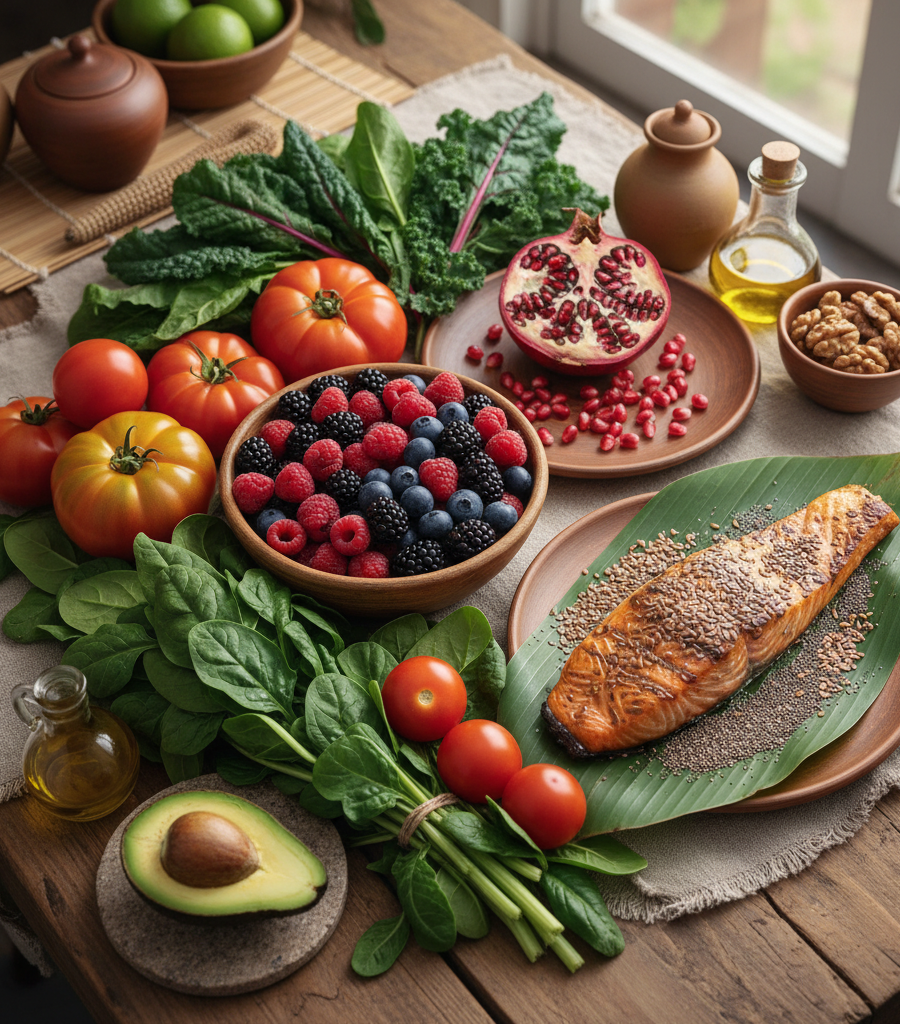
Believe it or not, a proper diet can create an alkaline environment in the body, which is extremely unfavorable for the development and spread of cancer cells. Here is what I most often recommend:
Category | Recommended food | Why is it important? |
Antioxidants | All berries (raspberries, blackberries, blueberries), pomegranate, tomatoes, spinach, and other green leafy vegetables. | They actively destroy harmful free radicals that cause cell damage. |
Healthy fats | Wild salmon, flaxseed, chia seeds, walnuts, avocado. | Omega-3 fatty acids are powerful natural reducers of inflammation in the body. |
Whole grains | Quinoa, oats, brown rice, buckwheat. | They maintain stable energy levels and improve digestion, which is key for toxin elimination. |
Spices | Turmeric, ginger, garlic. | These spices are known as natural anti-inflammatory agents with many other health benefits. |
A little tip: Really try to avoid refined sugar, alcohol, and processed meat. They are known to fuel inflammatory processes in the body, which does not help us at all in the fight against the disease.
The best Ayurvedic supplements
From my experience, natural herbal preparations can truly significantly improve the quality of life for patients. Here are some of the most powerful herbs that can be extremely useful:
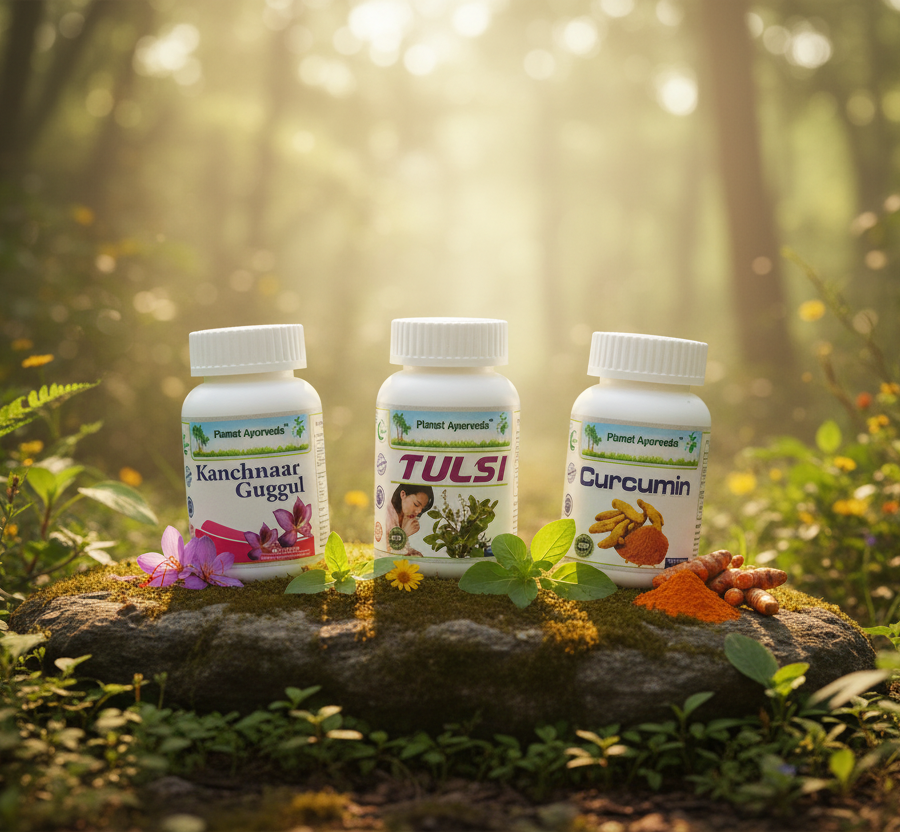
Curcumin: This is the active ingredient in turmeric. Curcumin has been studied in the laboratory for its effect on tumour cell lines. This is preclinical research — it has not established that curcumin prevents, slows or treats breast cancer in people.
Ashwagandha: Known as Indian ginseng or the "queen of adaptogens," it is excellent for dealing with stress, reduces fatigue which is often a consequence of chemotherapy, and significantly improves sleep quality. Ashwagandha can help you feel stronger and more resilient.
Kanchnaar Guggul: This is a traditional Ayurvedic formula, used for centuries to treat cysts, tumors, and various glandular swellings. It supports the function of the lymphatic system, which is key for detoxification.
Tulsi (Holy Basil): I consider Tulsi to be a powerful detoxifier. Not only does it protect the body from oxidative stress, but it also helps in clearing the respiratory tract – a true elixir for general health.
Lifestyle and detoxification: Not just medicine, but a way of living

For complete and truly deep healing, it is necessary to address both our mind and our lifestyle habits. Here are several key aspects:
Panchakarma (Detoxification): This is a deep Ayurvedic process of cleansing the body of accumulated toxins, performed through specific massages, herbal treatments, and natural therapies. Regular detoxification is of vital importance.
Stress Management: Yoga and meditation are not just a trend; they truly help in reducing cortisol levels (the stress hormone), which is key for a healthy and strong immune system. Find time for yourself, for peace and silence.
Quality Sleep: The body regenerates most and best in the period between 10:00 PM and 2:00 AM. Try to go to bed early and ensure enough quality sleep to allow the body to renew itself.
Moderate Activity: A daily, brisk walk in the fresh air for 30-45 minutes not only improves circulation but also boosts mood and general vitality.
Conventional treatment methods: An inevitable part of the solution
An integrative approach, in my opinion, means taking the best of both worlds – conventional medicine and natural support. The main medical treatments applied include:
Surgery: Removing the change is often the first step.
Chemotherapy and Radiotherapy: These are targeted methods for destroying cancer cells.
Hormonal and Targeted Therapy: These are applied for specific types of cancer and are aimed at blocking certain mechanisms of tumor growth.
Conclusion: Your health is in your hands, the best prevention is being informed
Breast cancer is definitely a serious challenge, but with a combination of early diagnosis, modern medicine, and Ayurvedic natural support, the path to recovery is much more certain and less stressful. Please, listen to your body, do not ignore symptoms, and by no means delay examinations. Your health is a priority.
For professional consultations and Ayurvedic advice, do not hesitate to contact us at:
070 350 446
Literature used and scientific sources
1. General medical information and breast cancer statistics
World Health Organization (WHO): Breast Cancer Key Facts. Global statistics, risk factors, and guidelines for early diagnosis.
American Cancer Society (ACS): Breast Cancer Signs and Symptoms. A detailed guide to recognizing early changes in the breasts.
Centers for Disease Control and Prevention (CDC): What Are the Symptoms of Breast Cancer?
2. Scientific studies on Ayurvedic herbs (Curcumin and Ashwagandha)
National Institutes of Health (NIH / PubMed): Curcumin and Cancer: An Overview. A scientific paper explaining the mechanisms of curcumin in inhibiting cancer cells.
PubMed: Withania somnifera (Ashwagandha) in Cancer Treatment. A study on the impact of Ashwagandha on reducing fatigue in chemotherapy patients and its anti-cancer properties.
MDPI - Molecules: Anticancer Properties of Tulsi (Ocimum sanctum). Research on phytochemicals in Tulsi that help prevent DNA damage.
3. Nutrition, lifestyle, and breast cancer
Harvard T.H. Chan School of Public Health: Diet and Cancer. A guide on how a plant-based diet and omega-3 fats affect risk reduction.
Mayo Clinic: Breast cancer prevention: How to reduce your risk. Professional advice on physical activity and avoiding alcohol.
4. Ayurvedic approach and Kanchnaar Guggul
Journal of Ayurveda and Integrative Medicine (J-AIM): Ayurvedic management of Granthi (Cysts) and Arbudas (Tumors). A scientific look at the use of the herb Bauhinia variegata (main ingredient in Kanchnaar Guggul).
Continue reading
 Ayurvedic Basics & Doshas
What is Ayurveda: A Complete Guide for Beginners and Healthy Living
Discover the power of Ayurveda: A comprehensive guide to the 5,000-year-old "Science of Life." Learn how to identify your unique doshas (Vata, Pitta, and Kapha), how to kindle your digestive fire (Agni), and how to integrate ancient rituals and powerful herbs into a modern lifestyle for perfect balance and longevity.
 Ayurveda
Turmeric as a Remedy: Benefits, Uses, and Best Recipes
This blog post serves as a comprehensive guide to the power of the "golden spice" – turmeric. The text explains in detail the anti-inflammatory and antioxidant properties of curcumin, its application for chronic pain, digestive issues, and boosting immunity. In addition to scientific facts, the post offers practical recipes for "golden milk" and tea, as well as recommendations for high-quality supplements for maximum results.
 Ayurveda
Natural home remedies everyone should know: Your kitchen as a pharmacy
Discover 19 simple and powerful home remedies from your kitchen that help with coughing, digestive issues, headaches, and boosting immunity. Learn how the ancient Ayurvedic wisdom can help you improve your health in a natural way.
Your Ayurvedic overview
Curious about your own constitution?
Take the free guided assessment and receive your personal Ayurvedic overview — about ten minutes, private to your account.
Start Your Journey